
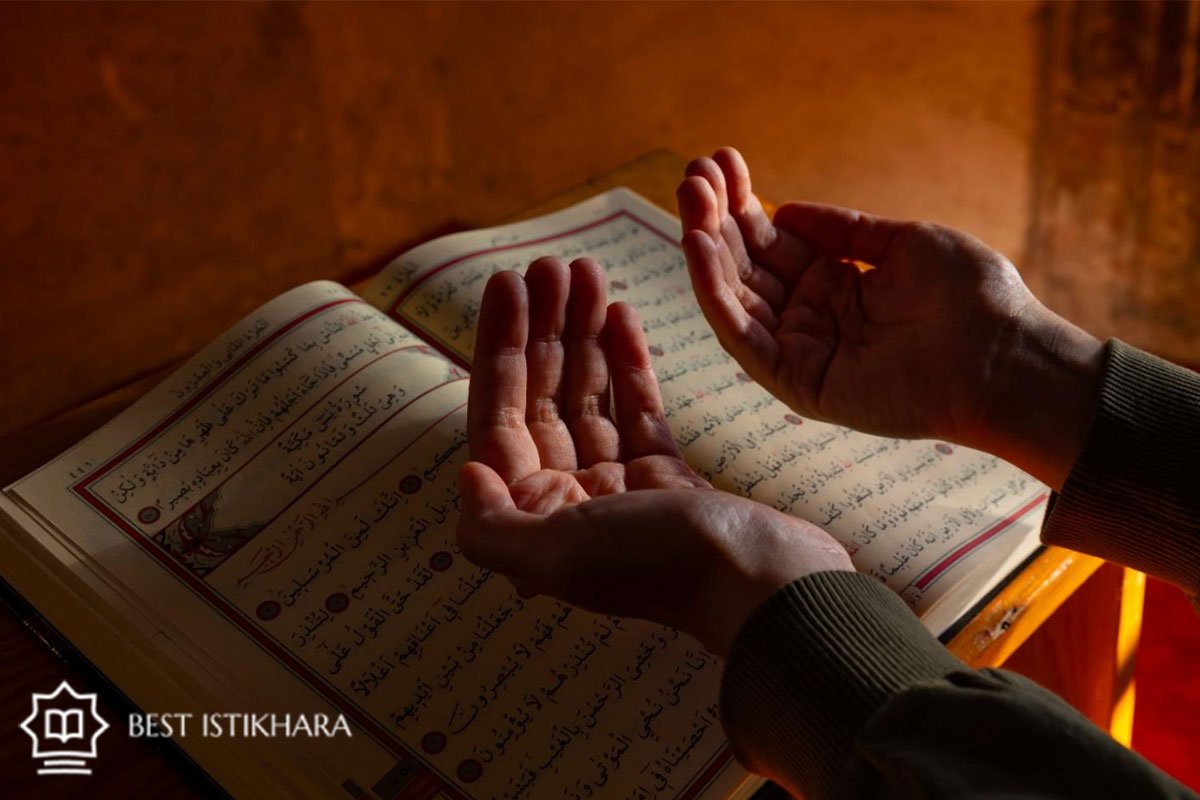
We must seek Allah’s (سُبْحَانَهُ وَتَعَالَى) help in times of need. He alone is Al-Qadir and Al-Aziz. Allah (سُبْحَانَهُ وَتَعَالَى) says in the Holy Quran:
Your Lord has said: “Call to Me that I may answer your call. Surely those who disdain worshipping Me will enter Hell, disgraced.” [40:60]
At times, we must make difficult decisions. Decisions that will have a lasting impact on our lives, in particular, can be extremely daunting. It is times like these that we need Allah’s (سُبْحَانَهُ وَتَعَالَى) divine guidance and intervention.
The best way to ask for Allah’s (سُبْحَانَهُ وَتَعَالَى) guidance is through prayer. This can be in the form of supplication as well as Istikhara. Ideally, we can do both to gain Allah’s (سُبْحَانَهُ وَتَعَالَى) help and guidance.
Istikhara-A Deep Dive
The word Istikhara is derived from the word khair, which means goodness. In essence, through Istikhara, we are seeking goodness from Allah (سُبْحَانَهُ وَتَعَالَى) , who is the All-Knowing. It is against Allah’s (سُبْحَانَهُ وَتَعَالَى) divine Grace and Excellence that He communicates directly with mere mortals. Even the blessed Messengers (عَلَيْهِ ٱلسَّلَامُ) of Allah (سُبْحَانَهُ وَتَعَالَى) received divine revelations through the intercession of Hazrat Jibrail (عَلَيْهِ ٱلسَّلَامُ).
Still, Allah (سُبْحَانَهُ وَتَعَالَى) is closer to us than we can ever imagine and there is a way we can get guidance from Him. A tradition narrated by Hazrat Jabir bin Abdullah (رَضِيَ ٱللَّٰهُ عَنْهُ), an esteemed companion of the Holy Prophet (ﷺ) does as follows:
“The Prophet (p.b.u.h) used to teach us the way of doing Istikhara (Istikhara means to ask Allah to guide one to the right sort of action concerning any job or a deed), in all matters as he taught us the Suras of the Qur’an. He said, “If anyone of you thinks of doing any job he should offer a two rak`at prayer other than the compulsory ones and say (after the prayer): — ‘Allahumma inni astakhiruka bi’ilmika, Wa astaqdiruka bi-qudratika, Wa as’alaka min fadlika Al-`azlm Fa-innaka taqdiru Wala aqdiru, Wa ta’lamu Wala a’lamu, Wa anta ‘allamu l-ghuyub. Allahumma, in kunta ta’lam anna hadha-lamra Khairun li fi dini wa ma’ashi wa’aqibati `Amri (or ‘ajili `Amri wa’ajilihi) Faqdirhu wa yas-sirhu li thumma barik li Fihi, Wa in kunta ta’lamu anna hadha-lamra shar-run li fi dini wa ma’ashi wa’aqibati `Amri (or fi’ajili `Amri wa ajilihi) Fasrifhu anni was-rifni anhu. Waqdir li al-khaira haithu kana Thumma ardini bihi.’ (O Allah! I ask guidance from Your knowledge, And Power from Your Might and I ask for Your great blessings. You are capable and I am not. You know and I do not and You know the unseen. O Allah! If You know that this job is good for my religion and my subsistence and in my Hereafter–(or said: If it is better for my present and later needs)–Then You ordain it for me and make it easy for me to get, And then bless me in it, and if You know that this job is harmful to me In my religion and subsistence and in the Hereafter–(or said: If it is worse for my present and later needs)–Then keep it away from me and let me be away from it. And ordain for me whatever is good for me, And make me satisfied with it). The Prophet (ﷺ) added that then the person should name (mention) his need.” [Sahih al-Bukhari, Vol. 2, Book 21, Hadith 263]
This hadith details the purpose of and how Salat al-Istikhara should be performed. The special prayer is performed when we want to receive divine guidance. It consists of two rakahs performed after the obligatory salah. The supplication for Istikhara follows this.
It is customary to refrain from talking to anyone after Salat al-Istikhara and go to sleep. One must have clear intentions to seek Allah’s (سُبْحَانَهُ وَتَعَالَى) guidance on top of all the prayers.
Individuals who perform istikhara report getting visions related to their decisions in their dreams. Seeing colors like green gives a positive sign and encourages us to proceed with the decision, while red or similar colors signal a negative outcome to the decision and should not be proceeded with.
Sometimes, individuals do not see anything, but there is a feeling of satisfaction or restlessness, depending upon the guidance provided. Regardless, when done correctly istikhara can tremendously help us with critical decisions.
Significance of Dua
Dua or supplication is a basic form of worship in Islam. Glorifying Allah (سُبْحَانَهُ وَتَعَالَى) and turning towards Him for help is a kind of prayer. Dua is different from salah in that it is not obligatory, nor does it have specific perquisites or rituals. However, dua compliments salah.
It is the supplication that comes straight from the heart. Our deepest desires and most urgent needs can be summed up in dua and much more. Allah (سُبْحَانَهُ وَتَعَالَى) expects us to submit to Him completely and ask only Him for anything.
Sincere and dedicated supplication, according to the Holy Prophet (ﷺ), is the only form of worship that can alter destiny. It can turn our fate as anything is possible for Allah All Mighty (سُبْحَانَهُ وَتَعَالَى). So, if we make dua to receive guidance from Allah (سُبْحَانَهُ وَتَعَالَى) and blessing for goodness, it will surely be answered.
How Istikhara and Dua Complement Each Other
It is advised that we should turn to Allah (سُبْحَانَهُ وَتَعَالَى) in times of need as much as we can. This is why, when confronted by critical decisions, we should all do both perform istikhara and dua. Istikhara is a special dua that has been taught by the Holy Prophet (ﷺ). This makes it similar to other supplications that have been designated for specific needs, as evidenced by the traditions of the Holy Prophet (ﷺ).
Both istikhara and dua strengthen our faith in Allah (سُبْحَانَهُ وَتَعَالَى) as we turn to Him in the direst circumstances. It highlights our trust in our Lord (سُبْحَانَهُ وَتَعَالَى).
Dua in addition to istikhara is meant to further invoke Allah’s (سُبْحَانَهُ وَتَعَالَى) assistance. We can plead for Allah (سُبْحَانَهُ وَتَعَالَى) to bless us with His guidance. Since the words of dua in general are not fixed or defined, our supplications can be deeply personal.
While Allah (سُبْحَانَهُ وَتَعَالَى) is the All-Knowing, through dua, we can plead for His favor by going into details about the decision that needs to be taken. We can mention the matter regarding which decision needs to be taken, like marriage or a new job offer, and what we expect the outcome to be.
Seeking Allah’s (سُبْحَانَهُ وَتَعَالَى) Blessings
At any and every stage of life, we require Allah’s (سُبْحَانَهُ وَتَعَالَى) blessings and assistance. We are always dependent on Him as Allah (سُبْحَانَهُ وَتَعَالَى) is the source of all goodness that is in existence. Without His help, there is no hope. This is why we must ask for His favors and blessings any chance we get.
We can never praise or glorify Him enough. We are dependent upon Him, while He is completely independent of anything. To seek Allah’s (سُبْحَانَهُ وَتَعَالَى) help, we should do all we can; this includes praying to Him in various forms.
To help make important decisions, it is ideal that we perform istikhara and make dua to Allah (سُبْحَانَهُ وَتَعَالَى) for maximum guidance. Allah’s (سُبْحَانَهُ وَتَعَالَى) pleasure is the only way we can succeed in this world and the Hereafter, so to achieve this, we must do everything we can.