
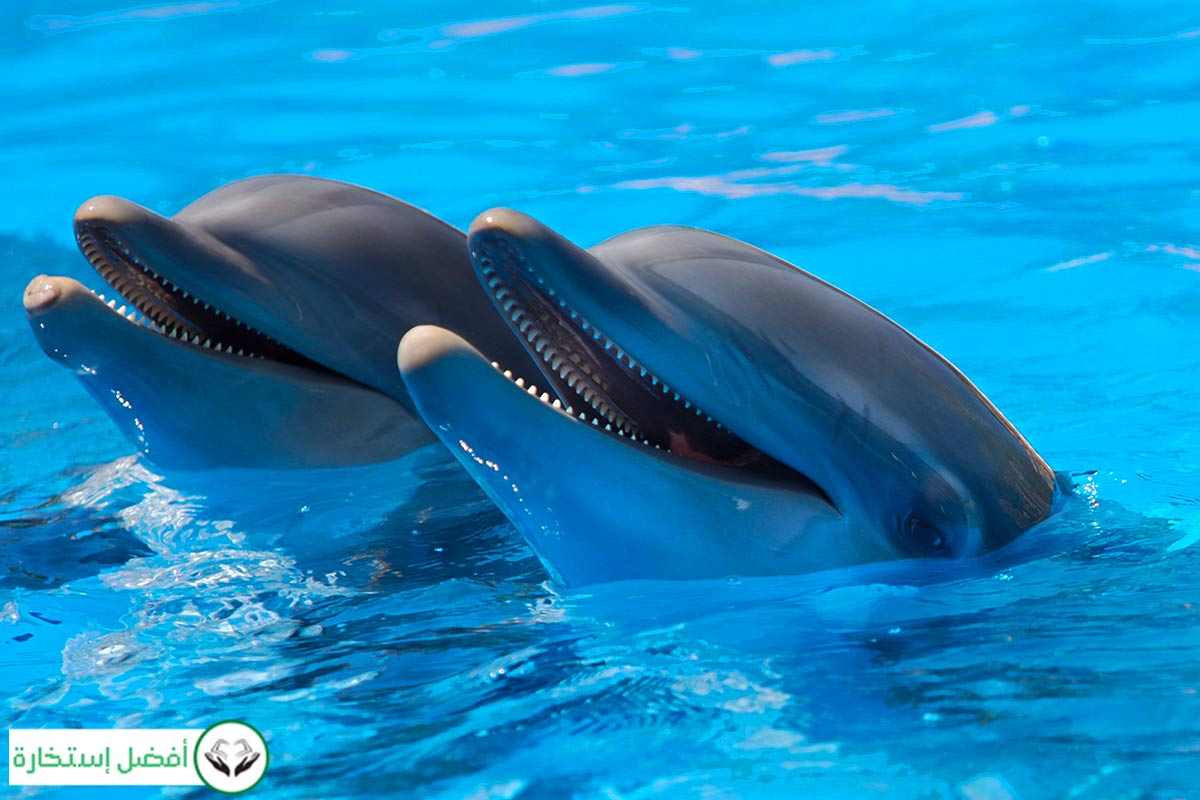
Dreams can be vivid, emotional, and sometimes difficult to understand. In Islam, however, not every dream is treated as a divine message or as a prediction of future events. The Prophet Muhammad ﷺ taught that dreams can have different sources, including good visions, distressing dreams, and experiences connected to a person’s own thoughts. This distinction is important when considering a dream about a dolphin. A dolphin does not have one universally established meaning in the Qur’an or authentic Hadith, so its interpretation should be approached cautiously and in light of the dreamer’s circumstances. If you want to learn more about the subject, see dream interpretation in Islam.
What Does It Mean to Dream of a Dolphin in Islam?
There is no authentic Islamic text that assigns a fixed symbolic meaning to seeing a dolphin in a dream. Unlike some dreams described in the Qur’an, such as Prophet Yusuf’s vision of the sun, moon, and eleven stars, the dolphin is not given a specific dream interpretation in the Qur’an or authentic Hadith.
For that reason, it would be too definite to say that a dolphin always represents intelligence, friendship, prosperity, spiritual guidance, or another particular quality. Those associations may appear in modern or later discussions of dream symbolism, but they should not be presented as established Islamic teachings.

The circumstances of the dream can nevertheless be relevant when someone reflects on its possible meaning. A calm dolphin swimming in clear water may leave a very different impression from a dolphin that is trapped, aggressive, injured, or frightening. The dreamer’s emotions, recent experiences, and personal associations with dolphins may also matter.
In Islamic dream interpretation, these details should be considered with humility rather than turned into a universal symbolic dictionary. A pleasant dream may be a source of encouragement, while an upsetting dream should not automatically be treated as a warning about a future event.
Is Seeing a Dolphin in a Dream a Good or Bad Omen in Islam?
Seeing a dolphin in a dream cannot be classified as inherently good or bad according to a general Islamic rule. The Qur’an and authentic Sunnah do not establish the dolphin as either a positive or negative omen.
The Prophetic guidance on dreams explains that dreams can differ in their source and character. Some may contain good tidings, some may be distressing, and some may reflect what a person has been thinking about while awake. Therefore, the emotional tone and circumstances of a particular dream are more important than assigning a fixed meaning to the animal itself.
If the dream was peaceful and left the person with a sense of gratitude or reassurance, they may regard it as a pleasant experience without claiming certainty about its origin. If it was frightening or disturbing, Islamic guidance recommends seeking refuge in Allah and not dwelling on or spreading the dream. A dream should not by itself be used as proof that something good or bad will happen.
What Do Islamic Scholars Say About the Interpretation of Dolphin Dreams?
Classical Muslim scholars did develop traditions of interpreting dreams, but this does not mean that every animal has a universally agreed meaning. Dream interpretation can depend on the circumstances of the person, the details of the vision, and the broader symbolism used by a particular interpreter.
It is also important to distinguish between the Qur’an and authentic Hadith on dreams and later works of dream interpretation. The Qur’an demonstrates that some dreams can carry meaningful symbolism; for example, Prophet Yusuf’s dream of eleven stars, the sun, and the moon is presented as significant. This does not, however, establish a general rule that every creature seen in a dream has a divinely assigned symbolic meaning.
The story of Prophet Yunus (peace be upon him) should likewise not be used to claim that a dolphin represents him. The Qur’an describes Yunus as being swallowed by a great fish, and Islamic sources do not establish a dolphin as a symbol of Prophet Yunus. Similarities between aquatic animals are not enough to create a specific Islamic dream interpretation.
Accordingly, when a dolphin appears in a dream, a cautious interpretation should begin with the dream’s details and the dreamer’s circumstances rather than with an assumed symbolic definition. Scholarly guidance on dreams also emphasizes that interpretation is a specialized matter and that not every dream requires or supports a definite interpretation.
Are There Any Islamic Texts or Teachings That Discuss the Symbolism of Dolphins in Dreams?
No Qur’anic verse or authentic Hadith establishes a specific symbolic meaning for dolphins in dreams. Islamic sources do discuss dreams more generally, including the possibility of good visions, distressing dreams, and dreams arising from a person’s own thoughts and experiences. They also provide guidance on how a Muslim should respond to an unpleasant dream.
This means that claims such as “a dolphin always represents abundance,” “a dolphin guarantees spiritual guidance,” or “a dolphin is a sign of a coming blessing” should not be presented as established Islamic teachings unless a reliable source specifically supports them.
For readers interested in classical dream interpretation, later scholarly works may contain interpretations of particular animals or circumstances. Such material should be identified as later interpretive tradition rather than attributed directly to the Qur’an or the Prophet Muhammad ﷺ. Even within that tradition, interpretations should not be treated as certain predictions.
The safest Islamic approach is therefore to consider the dream carefully without becoming dependent on it for religious or major life decisions. Dreams may be personally meaningful, but they do not replace the Qur’an, authentic Sunnah, sound judgment, consultation, or prayer when making important choices.
How Should a Muslim Respond to a Dream About a Dolphin?
If the dream was pleasant, a Muslim may thank Allah and reflect on any beneficial reminder it prompted. If the dream was disturbing, the Sunnah gives practical guidance: seek refuge in Allah from Satan, lightly spit or blow toward the left three times, change one’s sleeping position, and avoid unnecessarily telling others about the disturbing dream.
Most importantly, there is no need to fear a dolphin dream simply because it contains an unfamiliar symbol. Its presence does not establish that a particular event will happen or that Allah is sending a specific prediction. The meaning of a dream, if it has one, is ultimately known with certainty only to Allah.
Conclusion
In Islamic dream interpretation, there is no authentic Qur’anic or Prophetic teaching that gives the dolphin one fixed meaning. A dream about a dolphin may feel significant, peaceful, frightening, or emotionally memorable, but its interpretation should not be reduced to claims about intelligence, companionship, nature, prosperity, or spiritual guidance without reliable evidence.
The Islamic approach to dreams is more careful: consider the type of dream, its context, the dreamer’s circumstances, and the guidance of the Qur’an and authentic Sunnah. A dolphin dream can be reflected upon as a personal experience, but it should not be treated as a certain omen or divine prediction. For a broader discussion of animal imagery and dreams, see dream interpretation of animals in Islam.