
The Islamic dream interpretation of Seeing peacock in Islamic Dream often stirs mixed feelings in the heart, blending beauty with unease and admiration with quiet concern. Many people wake unsettled because the peacock is a powerful image, one that can point to pride, attraction to appearances, worldly standing, or a subtle test tied to desire and self-image. At Best Istikhara, this vision is approached with care and balance, understanding that the peacock does not carry a single fixed meaning but shifts according to the dreamer’s spiritual state, intentions, and lived circumstances.
This article seeks to uncover those layers without stopping at surface symbolism. Meaning changes with detail: whether the peacock appears calm or aggressive, spreads its feathers, flies away, enters the house, or shows unusual colours such as white or black. Interpretation also differs for a man, a single woman, a married woman, or a pregnant woman, and is shaped by the dreamer’s emotions, the place of the vision, and even its timing, particularly dreams seen after Fajr.
Following the Best Istikhara method, the discussion moves from core meanings grounded in the Qur’an, Sunnah, and classical scholars to specific scenarios and clear guidance for reflection and action. This dream might have a serious meaning. If you want your dream interpreted personally by our Sheikh, send us a message on WhatsApp: +90 539 374 42 39.
Different Conditions of Seeing peacock in Islamic Dream
| Different Conditions of Seeing peacock in Islamic Dream | Islamic Interpretation |
|---|---|
| Seeing peacock in Islamic dream | Seeing a peacock in a dream symbolizes outward beauty, status, and attraction that test the dreamer’s sincerity; it may indicate honor or worldly attention that requires humility, gratitude to Allah ﷻ, and careful conduct to avoid pride. |
| Seeing a colorful peacock in a dream | A colorful peacock reflects visible blessings, reputation, or charm that can bring benefit if paired with taqwā, but becomes a trial if the heart inclines toward arrogance or showing off. |
| Seeing a white peacock in a dream | A white peacock points to apparent purity, good intention, or a respected image, yet it urges the dreamer to confirm this purity through righteous deeds and consistency in obedience. |
| Seeing a black peacock in a dream | A black peacock warns of hidden temptation, envy, or inner conflict, reminding the dreamer to seek protection through istighfār, duʿāʾ, and guarding the heart from pride or jealousy. |
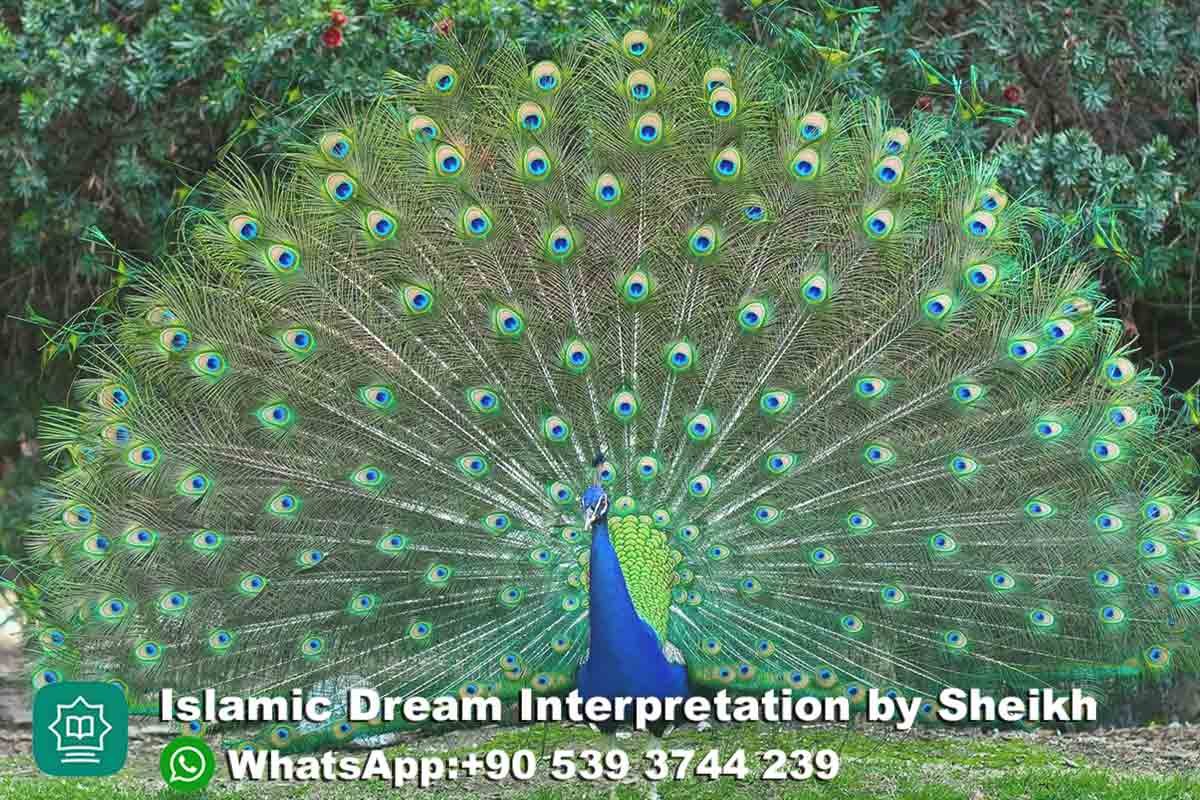
| Seeing a peacock displaying its feathers | This vision symbolizes display, reputation, or seeking attention; it can indicate success and recognition, but also cautions against ostentation and reliance on appearance rather than sincerity. |
| Seeing a calm or friendly peacock | A calm peacock suggests lawful honor, balanced success, or a dignified opportunity that brings ease, provided the dreamer responds with gratitude and humility. |
| Seeing an aggressive peacock in a dream | An aggressive peacock signifies harm arising from vanity, rivalry, or attraction to something deceptive, calling the dreamer to repent and correct intentions. |
| Being attacked or bitten by a peacock | Being bitten or scratched indicates consequences of pride, envy, or heedlessness, and urges immediate tawbah, self-discipline, and mending strained relationships. |
| Seeing a peacock flying away | A peacock flying away may represent a missed opportunity, fading reputation, or the loss of attraction due to negligence, reminding the dreamer to rely on Allah ﷻ rather than appearances. |
| Seeing a peacock inside the house | A peacock in the house reflects imbalance between adornment and responsibility within family life, calling for moderation, humility, and strengthening trust among household members. |
| Feeding a peacock in a dream | Feeding a peacock symbolizes nurturing the ego or prioritizing appearance and status, and warns the dreamer to redirect effort toward sincerity and inner reform. |
| Seeing many peacocks in a dream | Multiple peacocks indicate repeated tests of pride, social attention, or competition, reminding the dreamer to maintain taqwā amid comparison and rivalry. |
| Seeing peacock after Fajr | A peacock seen after Fajr carries clearer meaning, often pointing to a real-life matter of honor or visibility that requires lawful action, gratitude, and disciplined intention. |
| Seeing peacock in a dream for a man | For a man, the peacock represents authority, status, or attraction to prestige, warning against arrogance and urging justice, humility, and responsibility. |
| Seeing peacock in a dream for a single woman | For a single woman, the peacock points to attraction, proposals, or attention, advising her to prioritize piety and character over outward charm. |
| Seeing peacock in a dream for a married woman | For a married woman, the peacock highlights comparison, adornment, or social attention, calling for balance, trust, and safeguarding harmony in marriage. |
| Seeing peacock in a dream for a pregnant woman | For a pregnant woman, the peacock reflects heightened emotions and concern about appearance or future status, encouraging calm reliance on Allah ﷻ and avoiding anxiety. |
| Repeated dreams of seeing a peacock | Repeated peacock dreams indicate an ongoing spiritual test related to pride or visibility, urging consistent repentance, ṣadaqah, and self-accountability. |
| Hearing peacock sounds in a dream | Hearing a peacock’s call symbolizes attention-seeking or external influence, reminding the dreamer to guard the heart from distraction and remain focused on obedience. |
| Chasing a peacock in a dream | Chasing a peacock reflects pursuit of status, admiration, or worldly appeal, advising the dreamer to reassess priorities and seek what pleases Allah ﷻ over fleeting recognition. |
For more information about the Dream Interpretation of Birds In Islam, you can refer to this article on our website.
Interpretation of the Dream of Seeing peacock in Islamic Dream by Ibn Sirin
Interpretation of the Dream of Seeing peacock in Islamic Dream by Ibn Sirin points to a vision closely tied to outward beauty, rank, and the testing of the nafs through admiration of form and status. In the understanding attributed to Ibn Sīrīn, the peacock often represents a person of charm, wealth, or elevated appearance whose inner reality demands discernment. Seeing it calm and graceful may indicate lawful honour, a refined spouse, or success that comes with responsibility, while a sense of awe without arrogance reflects gratitude to Allah ﷻ and the correct use of blessings. When the dream carries ease and joy, or appears after Fajr, it leans toward good news that remains conditional upon humility and obedience.
At other times, the same image serves as a warning. Pride, rivalry, or deception within the dream changes its direction. An aggressive peacock, biting or scratching, signals harm born of vanity or attraction to something alluring yet harmful. Feeding a peacock in the house may point to nurturing appearances over substance, while chasing or being chased reflects inner tension between sincerity and display. Colour sharpens the message: white suggests apparent purity that must be supported by deeds, black hints at hidden envy or temptation, and excessive display warns of ostentation. The dreamer’s condition also matters. For a man, it cautions against arrogance in authority; for a single woman, attraction without piety; for a married woman, balance between adornment and trust; and for a pregnant woman, calm reliance upon Allah ﷻ. Rectification follows the Sunnah through renewed tawbah, quiet ṣadaqah, mending ties, guarding the tongue, and choosing lawful paths, supported by steady dhikr and duʿāʾ.
The takeaway is to receive this sign with humility, correct traces of pride through repentance and charity, and align outward success with inward obedience to Allah ﷻ.
Interpretation of the Dream of Seeing peacock in Islamic Dream by Imam Sadiq
Interpretation of the Dream of Seeing peacock in Islamic Dream by Imam Sadiq is framed through a moral and spiritual lens that weighs outward attraction against inward truth. In this approach, the peacock symbolises adornment, influence, and the trial of being seen, where beauty or status may either raise the servant through gratitude or mislead the heart toward pride. When the peacock appears friendly, calm, or radiant without fear, it can indicate honour, lawful provision, or a refined opportunity granted by Allah ﷻ, especially when the dreamer feels serenity or sees the vision after Fajr, a time associated with clarity and sincerity.
The vision turns cautionary when arrogance, rivalry, or deception dominates its atmosphere. An aggressive peacock, biting or scratching, points to harm arising from vanity, envy, or attraction to appearances that conceal weakness of character. Seeing a peacock in the house may reflect imbalance between adornment and responsibility, while feeding it suggests encouraging the ego rather than disciplining it. Colour nuances deepen the meaning: a white peacock calls for purity proven by action, a black peacock warns of hidden temptation or jealousy, and excessive display signals ostentation. The dreamer’s situation refines the message further. For a man, it warns against misuse of authority; for a single woman, attraction without taqwā; for a married woman, discord born of comparison; and for a pregnant woman, anxiety driven by outward fears.
Rectification follows the path of the righteous through sincere tawbah, discreet ṣadaqah to purify intention, repairing ties harmed by competition, guarding the gaze and tongue, and seeking istikhārah before major decisions, while maintaining regular dhikr and duʿāʾ to anchor humility. The takeaway is to treat this vision as a call to align visible blessings with hidden sincerity through repentance, charity, and obedience to Allah ﷻ.
What Does Seeing a Peacock in Islam Mean
What Does Seeing a Peacock in Islam Mean centres on outward beauty, attraction, and the trial that accompanies visible blessings. In Islamic understanding shaped by classical scholarship, the peacock reflects adornment, reputation, and worldly appeal that may become a means of gratitude to Allah ﷻ or a subtle test of pride and heedlessness. When the dream carries calm emotions, a friendly presence, or unfolds in a dignified setting, it may signal honour, lawful provision, or an opportunity that requires wisdom and humility, particularly if seen after Fajr when dreams are often clearer and more sincere.
By contrast, the symbol becomes cautionary when fear, arrogance, or rivalry frames the scene. An aggressive peacock, biting or scratching, suggests harm rooted in vanity or jealousy, while seeing it in the house can point to imbalance between outward display and inner responsibility. Feeding a peacock may reflect nurturing the ego over discipline. Colour adds precision: white hints at apparent purity that must be matched by righteous action, black warns of hidden temptation, and excessive display points toward ostentation. The dreamer’s state shapes the guidance as well. For a man, it cautions against misuse of authority; for a single woman, attraction without taqwā; for a married woman, comparison that erodes trust; and for a pregnant woman, anxiety stirred by outward fears.
Rectification lies in sincere tawbah, quiet ṣadaqah to cleanse intention, repairing strained relationships, guarding the tongue and gaze, and seeking istikhārah before decisions, while maintaining steady dhikr and duʿāʾ so blessings draw the heart closer rather than distract it. The takeaway is to respond by pairing gratitude with humility and correcting the heart through repentance, charity, and obedience to Allah ﷻ.
Positive vs Negative Meanings of Seeing a Peacock
Positive vs Negative Meanings of Seeing a Peacock shows how one symbol may carry glad tidings or a sober warning depending on intention, behaviour, and context. In the balanced view of the scholars, a peacock that appears friendly, calm, or dignified can indicate honour, refined provision, or a blessing that brings visibility without corruption, especially when the dreamer feels peace and the vision occurs after Fajr. Such a sign invites gratitude to Allah ﷻ, restraint of the ego, and lawful use of adornment and status, whether for a man entrusted with authority or for a single or married woman navigating attention with taqwā.
The meaning shifts when fear, arrogance, or rivalry dominate the dream. An aggressive peacock, biting or scratching, points to harm born of vanity or envy. Seeing it in the house may signal imbalance between display and duty, while feeding it suggests nurturing pride instead of discipline. Colour sharpens the warning: white suggests purity that demands proof through deeds, black signals hidden temptation or jealousy, and excessive display warns of ostentation that risks spiritual loss. The dreamer’s condition also matters, as a pregnant woman may be cautioned against anxiety driven by outward fears, while a man may be reminded to curb arrogance and uphold justice.
Rectification is close at hand: renew tawbah, give ṣadaqah quietly to purify intention, mend ties strained by comparison, guard the gaze and tongue, seek istikhārah before choices that increase visibility, and keep steady dhikr and duʿāʾ so blessings remain a means of nearness. The takeaway is to read this vision as a call to align outward beauty with inward humility through repentance, charity, and obedience to Allah ﷻ.
Seeing a Peacock After Fajr
Seeing a Peacock After Fajr carries particular weight, as dreams at this time are often clearer when the heart has risen in obedience to Allah ﷻ. In this setting, a peacock may point to honour, visibility, or attraction about to manifest in waking life, with the outcome shaped by sincerity. When the peacock appears friendly, calm, or dignified and the dreamer feels peace, it may indicate lawful success, recognition, or a refined opportunity requiring gratitude and restraint. For a man, this may relate to leadership tested by humility, and for a single or married woman, attention that must be governed by taqwā. A white peacock seen in such a dream leans toward apparent goodness that calls for consistent deeds, especially if the setting is clean and undisturbed.
The vision warns when fear, agitation, or arrogance accompanies it. An aggressive peacock, biting or scratching after Fajr, cautions against pride, rivalry, or attachment to appearances over substance. Seeing it in the house may indicate imbalance between adornment and responsibility. Dark colours point to hidden envy or temptation, and feeding the peacock suggests indulging the ego rather than disciplining it. Rectification is immediate: renew tawbah at the start of the day, give ṣadaqah quietly to purify intention, mend ties harmed by comparison, guard the gaze and tongue, and seek istikhārah before decisions that increase visibility, supported by steady dhikr and duʿāʾ.
The takeaway is to treat this post-Fajr vision as guidance to begin the day with repentance, humility, and lawful intention so any honour becomes a source of nearness to Allah ﷻ.
Practical Guidance After Seeing a Peacock in a Dream
Practical Guidance After Seeing a Peacock in a Dream starts with recognising how outward blessings interact with the heart’s intention. When the dream carries calm emotions, a friendly presence, or appears after Fajr, it suggests good news that calls for gratitude to Allah ﷻ and disciplined use of what is shown, whether reputation, beauty, or opportunity. Renew your intention, thank Allah ﷻ with quiet praise, and commit to lawful means in matters that bring visibility, especially for a man in authority or a single or married woman navigating attention with taqwā.
When the dream feels heavy or includes warning signs such as an aggressive peacock, biting or scratching, or unease at seeing it in the house, correction should be swift. Begin with sincere tawbah and frequent istighfār to cleanse pride or envy, then give ṣadaqah discreetly to soften the nafs and protect blessings. If feeding the peacock or focusing on display was central, reduce excess, guard the gaze and tongue, and mend ties strained by rivalry or comparison. Colour guides response: a white peacock calls for aligning deeds with apparent purity, while a black peacock urges vigilance against hidden temptation. For a pregnant woman, prioritise calm duʿāʾ and reliance; for a married woman, strengthen trust and contentment; for a single woman, anchor choices in piety; for a man, uphold justice and humility.
Maintain regular dhikr morning and evening, seek istikhārah before decisions that increase exposure, and keep company that reminds of accountability so adornment never outweighs obedience. The takeaway is to translate this vision into repentance, gratitude, and disciplined action so any honour becomes a means of nearness to Allah ﷻ rather than a trial.
Common Misinterpretations About Peacock Dreams in Islam
Common Misinterpretations About Peacock Dreams in Islam arise when the symbol is read in isolation, detached from intention, conduct, and context. One common error is assuming every peacock dream promises wealth or fame, while the scholars taught that visible beauty can be a test as much as a gift, depending on humility and obedience. Another mistake is treating any colourful display as purely negative, overlooking that a friendly, calm presence with peaceful emotions, especially after Fajr, may indicate lawful honour or a refined opportunity that calls for gratitude rather than fear.
Other misreadings come from ignoring context. Some assume an aggressive peacock, biting or scratching, predicts unavoidable harm, when it more accurately warns of pride, envy, or rivalry that can be corrected through tawbah and disciplined choices. Others read seeing a peacock in the house as certain family discord, though it may simply point to imbalance between adornment and duty that can be repaired by reordering priorities and mending ties. Colour is often mishandled as well: white is taken as guaranteed purity, black as inevitable evil, yet both call for aligning deeds with appearances and guarding against hidden temptation. Feeding a peacock is sometimes read as generosity, though it may reflect nurturing the ego if intention is unchecked. The dreamer’s condition is also overlooked, despite meanings differing for a man, a single or married woman, or a pregnant woman.
Sound interpretation returns to action. Weigh the dream by emotions, actions, place, and timing, respond with istighfār, quiet ṣadaqah, guarding the tongue and gaze, and seeking istikhārah before choices that increase visibility, while keeping steady dhikr and duʿāʾ so symbols lead to reform. The takeaway is to avoid literalism and meet this vision with repentance, balance, and lawful intention so its meaning becomes guidance rather than confusion.