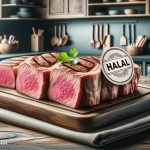

Halal, meaning ‘permissible’ in Arabic, is a term designating any object or action that is permissible to use or engage in, according to Islamic law. The term is widely used to denote specifically what is permissible under Islamic dietary laws. In the context of food, it not only specifies the types of meat and other goods permissible for consumption but also the way in which the food should be prepared. For meat to be certified as halal, the animal must be slaughtered in a manner that follows Islamic guidelines, such as invoking the name of Allah before making a swift, single cut to the throat, ensuring quick and humane death. Blood must be fully drained from the veins. This ritual slaughter is known as Zabiha and is intended to provide the meat pure and clean for consumption. Moreover, the halal food must not come into contact with or be prepared using any equipment or process that handles or contains non-halal substances like alcohol or pork products, ensuring the purity of the food from the beginning to the end of the processing chain. Click to get more information about halal vs haram topics discussed in today’s world.
Is Wild Boar Meat Considered Pork?
Wild boar meat, often a subject of culinary and cultural discussion, is not classified as pork in the traditional sense. However, it comes from an animal that belongs to the same species as the domestic pig. The distinction between wild boar and domestic pig meat arises not just from their living conditions and diets but also from their genetic makeup and historical contexts. While both animals are from the genus Sus, wild boars are not raised on farms and have a different lifestyle that affects the taste and texture of their meat. Traditionally, “pork” refers to the meat of the domestic pig (Sus domesticus), which is reared specifically for consumption under controlled feeding and environmental conditions.

Scientific Classification of Wild Boar
Wild boar (Sus scrofa) belongs to the same family as domestic pigs, but it is a distinct species and is considered the wild ancestor of the domestic pig. This species is native to a broad range of environments across Europe, Asia, and North Africa. Its ability to adapt to a wide variety of habitats has allowed it to be classified into several subspecies, which differ slightly in size, shape, and living habits. This adaptability also means that wild boar can survive in diverse climates and conditions, from woodlands to grasslands.
Comparison with Domestic Pigs
Compared to domestic pigs, wild boars are leaner with a stronger, more robust flavor that reflects their wild diet and active lifestyle. Domestic pigs are typically bred and raised in controlled environments, leading to fattier meat with a milder flavor. The diet of a wild boar, which can include roots, fruits, and small animals, contributes to the darker color and richer taste of its meat. Furthermore, wild boars are generally tougher and have less intramuscular fat than domestic pigs, which affects the cooking methods and culinary uses of their meat.
Halal Certification and Wild Boar
Halal certification is a critical process that assures Muslim consumers that the products they consume comply with Islamic dietary laws. This certification involves not only ensuring that the type of meat is permissible (halal) but also that the slaughter and processing methods adhere to Islamic principles. For meat to be certified halal, the animal must be healthy at the time of slaughter, killed through a swift incision to the throat while invoking the name of Allah, and all blood must be drained from the carcass.
How Meats Are Certified as Halal?
The halal certification process involves several steps to ensure compliance with Islamic laws. It starts with the verification of the animal’s suitability for consumption, excluding all species that are considered haram (forbidden), such as pigs and their derivatives. The slaughter must be performed by a sane adult Muslim who recites the Tasmiyah and Takbir (blessings invoking Allah’s name). The method of slaughter, known as Zabiha, also requires that the animal is not stunned prior to killing, as this might cause premature death or affect the draining of blood.
Challenges with Wild Meats in Halal Certification
Certifying wild meats like wild boar as halal presents unique challenges. Firstly, the natural lifestyle and diet of wild animals, which are not controlled, can lead to uncertainties about the consumption of forbidden substances. Moreover, ensuring the halal method of slaughter in a wild setting is practically challenging and often challenging. These factors make it difficult to guarantee that wild boar meat complies with strict halal standards, leading most Islamic scholars and halal certification bodies to categorize wild boar as haram, similar to domestic pigs.
Opinions from Various Islamic Jurisdictions
Islamic jurisprudence, or fiqh, varies significantly across different schools of thought and regions, affecting interpretations of what is considered halal and haram, including the status of wild boar meat.
Differences in Opinion Among Sunni and Shia Scholars
Among Sunni Muslims, the four main schools of jurisprudence (Hanafi, Maliki, Shafi’i, and Hanbali) generally agree on the prohibition of pork and its derivatives based on clear Quranic texts. However, nuances can arise in the interpretation of what constitutes a derivative of pork or related species, such as wild boar. Shia scholars, particularly those following Ja’fari jurisprudence, also adhere strictly to the prohibition of pork but might differ in their approach to animals that are biologically similar to domestic pigs, such as wild boar, based on hadith interpretations and the concept of najis (impurity).
Regional Variations in Halal Dietary Laws
Halal dietary laws also exhibit regional variations that reflect local Islamic traditions, cultural practices, and nutritional habits. For instance, some Southeast Asian Islamic authorities may have more detailed regulations regarding marine life than their Middle Eastern counterparts due to the geographic and dietary significance of seafood in the region. Similarly, the consumption of certain types of animals, like wild boar, maybe more hotly debated in areas where these animals are indigenous and commonly encountered, leading to differing scholarly opinions based on the necessity and local custom (urf).
Alternative Halal Meats
For Muslims seeking variety in their diet while adhering to halal dietary laws, several alternative types of meat are both permissible and widely available. Beef and chicken are staples in halal cuisine worldwide, renowned for their versatility and compatibility with various cooking traditions. Lamb and goat meat also offer rich flavors, which are especially popular in Middle Eastern and South Asian recipes. For those interested in the game, venison provides a halal option when sourced from animals that have been slaughtered according to Islamic principles. In coastal regions, a variety of seafood, including fish, shrimp, and crab, are considered halal without the need for specific slaughtering processes, broadening the choices available to observant Muslims. These alternatives not only comply with halal standards but also bring cultural and nutritional diversity to the Muslim diet.
Conclusion
In summary, the Islamic dietary law clearly categorizes wild boar as haram, prohibiting its consumption along with all derivatives of pigs. This ruling is based on explicit guidance from the Quran and further supported by Hadiths, reflecting a consensus among Islamic scholars across different schools of thought. Despite regional and cultural variations in dietary practices, the prohibition of pork and its kin remains a unifying dietary law for Muslims globally. For those seeking alternatives, Islam offers a wide range of halal options that include various land animals and seafood, ensuring nutritional practices that are not only lawful but also varied and nutritious. Understanding these guidelines helps uphold a diet that aligns with spiritual and religious principles, promoting purity and health in accordance with Islamic teachings.
Faq
- Is wild boar meat halal?
- Wild boar meat is generally considered haram (forbidden) in Islam due to its classification within the pig family, which is explicitly prohibited in the Quran.
- What does Islamic law say about consuming pork and its relatives?
- Islamic law, based on Quranic verses and Hadiths, prohibits the consumption of pork and its derivatives. This includes any animals from the pig family, which by extension includes wild boars.
- Can wild boar meat be made halal through proper slaughtering practices?
- No, even if slaughtered according to Islamic rites, wild boar meat cannot be considered halal because the animal itself is deemed impure and forbidden to consume.
- Are there any exceptions in Islamic jurisprudence that allow the consumption of wild boar?
- There are no mainstream Islamic teachings or jurisprudence that allow the consumption of wild boar. The consensus among scholars is that it remains haram.
- What alternatives do Muslims have for halal meats?
- Muslims are encouraged to consume other halal-certified meats such as beef, lamb, goat, chicken, and certain types of seafood, all of which must be processed according to halal slaughtering practices.
- How does cultural context influence the interpretation of halal meat?
- Cultural context can influence dietary habits, but the fundamental Islamic laws about forbidden meats remain consistent across cultures. The consumption of wild boar is uniformly considered haram regardless of regional culinary practices.