In today’s diverse culinary world, understanding the dietary restrictions of various cultures is paramount. For millions adhering to Islamic dietary laws, identifying halal foods—permissible under Islamic law—is a daily practice. Whipped cream, a popular dessert topping, comes into focus under these laws due to its ingredients and manufacturing processes. This exploration delves into the halal status of whipped cream, unraveling complexities around ingredients like gelatin and flavorings that may not always meet halal standards. By dissecting these components, we aim to provide clarity and guidance for consumers seeking to enjoy whipped cream without compromising their dietary beliefs. Click to get more information about halal vs haram topics discussed in today’s world.
What Makes a Product Halal?
Halal, an Arabic term for “permissible,” refers to what is allowed under Islamic law, particularly in food consumption. A product is deemed halal when it complies with Islamic dietary laws dictated by the Quran, the Hadith (sayings of Prophet Muhammad), and rulings by Islamic scholars. These laws prohibit certain ingredients and methods of preparation, most notably alcohol, blood, pork, and animals not properly slaughtered according to Islamic rites.

Basics of Halal Certification
For a product to receive halal certification, it must meet several criteria. First, it must be free of any components considered haram (forbidden) by Islamic law. This includes avoiding contamination with prohibited substances at any stage of the production process. Animals must be healthy at the time of slaughter and killed in the name of Allah, with a swift and humane cut to the throat. A credible Islamic certification body must regularly inspect the production facility to ensure ongoing compliance with halal standards. These principles ensure food items adhere to dietary restrictions and embrace ethical and hygienic practices, reflecting Islam’s holistic approach to consumption.
The Ingredients of Whipped Cream: A Halal Perspective
Whipped cream, a beloved topping for desserts worldwide, typically consists of cream, sugar, and stabilizers. From a halal perspective, the primary concern lies in the cream’s source and the nature of the stabilizers used.
Whipped Cream Ingredients: Halal Status
The main component of cream is naturally halal, a dairy product. However, its halal status can be compromised if cross-contamination occurs with non-halal substances during processing. Sugar, another crucial ingredient, is generally considered halal, though its processing methods should be scrutinized for using animal bone char as a decolorizing filter. Stabilizers, including gelatin or other gelling agents, pose a significant halal concern. Gelatin, often derived from pork or non-halal slaughtered animals, requires verification of its source. Vegetable-based stabilizers or gelatin from halal-certified sources are preferred to ensure compliance. By providing each ingredient adheres to halal standards, whipped cream can be enjoyed by those following Islamic dietary laws.
Case Studies: Halal Certification of Popular Whipped Cream Brands
The landscape of halal-certified foods has expanded to include various products, including whipped cream. This expansion reflects a growing demand among Muslim consumers for a broader selection of halal-compliant foods.
Halal-Certified Whipped Cream Brands
Several whipped cream brands have successfully obtained halal certification, ensuring their products meet the stringent dietary requirements of Islamic law. Brands like Reddi-Wip, for instance, offer certain products certified by recognized Islamic organizations. The certification process entails thoroughly reviewing the ingredients, sourcing, and manufacturing practices. This includes ensuring that all ingredients are free from alcohol and pork-derived products and that animal products come from halal-slaughtered animals. Additionally, the production facilities undergo regular inspections to prevent cross-contamination with non-halal items. This meticulous process ensures Muslim consumers can confidently enjoy these whipped cream products in their halal status.
DIY Halal Whipped Cream Recipes
Creating halal whipped cream at home is a delightful way to ensure that your desserts comply with Islamic dietary laws while catering to personal taste preferences.
DIY Halal Whipped Cream Recipes
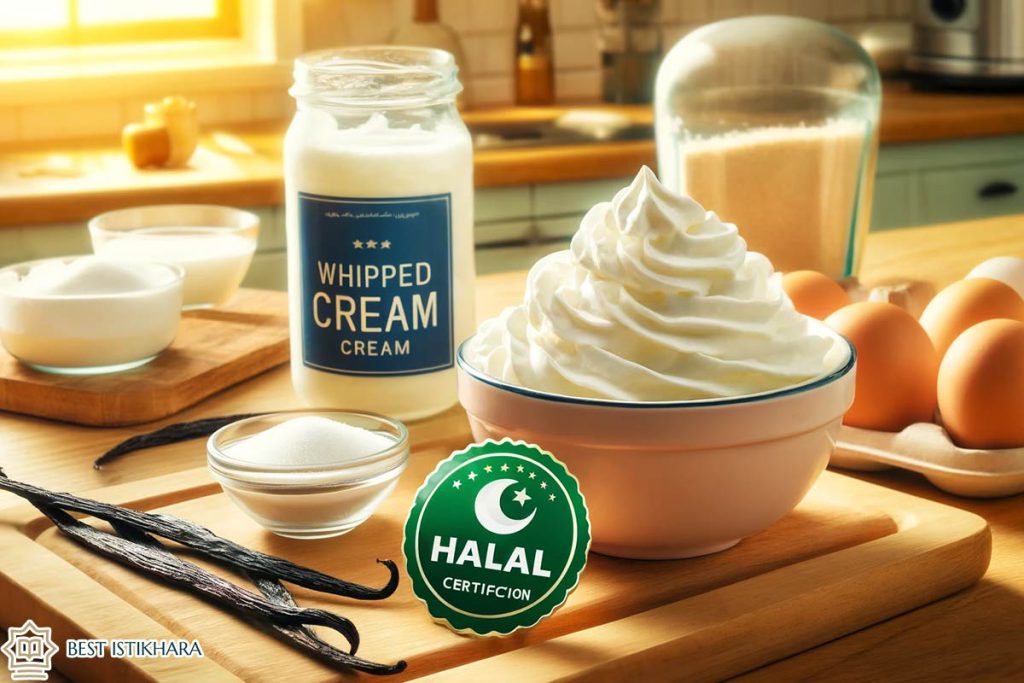
A basic halal whipped cream can be made using the following ingredients: 1 cup of heavy cream (ensure it’s from a halal-certified source), 2 tablespoons of powdered sugar (to avoid any non-halal processing agents), and ½ teaspoon of vanilla extract (make sure it’s alcohol-free or use vanilla powder as an alternative).
- Chill a metal mixing bowl and beaters in the freezer for at least 20 minutes.
- Pour the heavy cream into the chilled bowl and beat quickly until it thickens.
- Add powdered sugar and vanilla extract or powder, then beat until the mixture forms stiff peaks.
- Serve immediately or store in the refrigerator for up to 24 hours.
For a vegan or dairy-free version, coconut cream can be substituted for heavy cream, following the same procedure but ensuring the coconut cream is chilled overnight to separate the cream from the liquid.
Navigating Labels: Tips for Identifying Halal Whipped Cream
Selecting halal whipped cream from many options requires careful label reading and understanding of halal certifications.
How to Identify Halal Whipped Cream
- Look for Halal Certification Symbols: Many products feature symbols or logos from halal certification bodies. Familiarize yourself with these symbols, which vary by region but indicate compliance with halal standards.
- Inspect the Ingredients List: Avoid whipped cream containing alcohol-based flavorings or gelatin unless specifically marked as fish or halal-certified beef gelatin.
- Check for Cross-Contamination Warnings: Some labels might indicate that the product was processed in a facility that handles non-halal items. Depending on your level of observance, this might influence your choice.
- Research the Brand: Some brands are more committed to halal compliance than others. Quick online research can reveal a brand’s dedication to halal standards, certification status, and customer reviews.
By applying these tips, consumers can more confidently navigate their choices and select whipped cream options that align with halal dietary restrictions.
Alcohol in Whipped Cream & Halal
Alcohol is often used in flavored whipped creams to enhance taste and preserve the product. However, its inclusion raises significant concerns for those adhering to halal dietary laws.
Alcohol’s Impact on Halal Status
In Islam, consuming any amount of alcohol is strictly prohibited, making products containing alcohol non-halal. This restriction extends to flavored whipped creams that use alcohol-based extracts (like vanilla or almond) as ingredients. The presence of alcohol, regardless of its quantity, compromises the halal integrity of these whipped creams, rendering them unsuitable for consumption by Muslims. To cater to halal dietary requirements, manufacturers may opt for alcohol-free flavorings or natural extracts without alcohol. Consumers seeking halal options should meticulously read ingredient labels for alcohol or look for products specifically labeled as alcohol-free or halal-certified to ensure compliance with their dietary restrictions.
Halal Whipped Cream Alternatives
For those seeking halal alternatives to traditional whipped cream, the market and homemade solutions offer delightful options that align with Islamic dietary laws.

Halal Whipped Cream Alternatives
Coconut whipped cream stands out as a popular and easily accessible halal alternative. Made from the thick part of chilled coconut milk, it offers a creamy, fluffy texture similar to traditional whipped cream but without dairy or potential halal concerns related to gelatin or alcohol-based flavorings. To prepare, chill a can of full-fat coconut milk, scoop out the solidified cream, and whip with a sweetener like powdered sugar until light and airy. Flavorings such as vanilla powder can be added to enhance taste. Not only is coconut whipped cream halal, but it’s also a great option for vegans and those with dairy allergies, making it a versatile addition to desserts for diverse dietary needs.
Expert Opinions: Interviews with Halal Certification Authorities
Gaining insights from halal certification authorities provides an authoritative perspective on the nuanced considerations of deeming whipped cream as halal.
Experts on Halal Whipped Cream
Representatives from prominent halal certification bodies emphasize the importance of thorough ingredient vetting for whipped cream products. Key concerns include the source of gelatin if used and avoiding alcohol in flavorings. One expert highlighted the shift towards plant-based stabilizers and natural flavorings as a positive trend for ensuring halal compliance. They also mentioned the certification process involves not just ingredient assessment but also inspection of manufacturing facilities to prevent cross-contamination. Authorities recommend consumers look for the certification seal as a reliable indicator of halal compliance. They also encourage consumers to engage with manufacturers directly to understand their halal certification process and the steps taken to ensure products meet strict Islamic dietary guidelines.
FAQs
- What makes whipped cream halal?
- According to Islamic law, whipped cream is considered halal if it is free from haram (forbidden) substances. This includes ensuring that all ingredients, such as cream, sugar, and stabilizers, come from halal-certified sources. Additionally, it must not contain alcohol or gelatin derived from non-halal slaughtered animals.
- Can vegetarians eat halal whipped cream?
- Vegetarians can eat halal whipped cream, especially if made without gelatin or with a vegetarian gelatin substitute. However, it is important to check the ingredients for personal dietary restrictions.
- How can I verify if a whipped cream product is halal?
- Look for a halal certification logo on the packaging, which indicates the product has been inspected and approved by a halal certification authority. Additionally, you can contact the manufacturer for detailed information about their product’s halal status.
- Is it difficult to find halal whipped cream in stores?
- Availability varies by region. In areas with a significant Muslim population, halal-certified whipped cream may be readily available in supermarkets. Elsewhere, it may require more searching, including looking at specialty stores or seeking halal-certified brands online.
- Are there any halal whipped cream brands?
- Yes, some brands offer halal-certified whipped cream products. The availability of specific brands can depend on your location, so it’s beneficial to research and look for halal certification marks on products in your local stores or online.
- Can I make halal whipped cream at home?
- Absolutely! Making halal whipped cream at home is straightforward. Use halal-certified heavy cream and sweeten it with sugar or a halal-certified sweetener. Flavor with alcohol-free vanilla or other halal-certified flavorings to ensure the entire preparation is halal.
- Are there dairy-free halal whipped cream alternatives?
- Dairy-free alternatives like coconut whipped cream are naturally halal and suitable for vegans. Ensure all ingredients, such as the sweetener and flavorings, are halal-certified.
Conclusion
Navigating the halal status of whipped cream requires a mindful approach to ingredients, processing, and certification. Whether choosing store-bought options or creating homemade recipes, understanding the halal criteria is key to ensuring dietary compliance. The exploration of halal-certified brands, examining ingredients for potential non-halal elements, and the creativity in crafting alternative recipes offer a comprehensive guide for consumers. This journey enriches one’s culinary experience and reinforces the commitment to upholding halal dietary principles, allowing for the enjoyment of whipped cream without compromise.