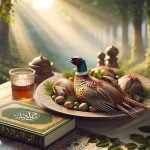
For many Muslims, adhering to halal dietary laws is a significant part of their faith. This raises the question: “Is kingfisher meat halal?” Kingfishers are admired for their vibrant colors and hunting skills, but the permissibility of their meat in Islam is not straightforward. In this article, we explore the Islamic perspective on consuming kingfisher meat. We’ll look at the general principles of halal and haram foods, consider scholarly opinions, and provide a clear understanding of whether kingfisher meat is permissible for Muslims to eat. Click to get more information about halal vs haram topics discussed in today’s world.
What Islamic Scholars Say About Eating Kingfisher Meat
Islamic scholars have diverse opinions on the permissibility of consuming kingfisher meat. Generally, the halal status of birds is determined by their characteristics and behavior. Scholars often refer to hadiths (sayings of the Prophet Muhammad, peace be upon him) and classical Islamic jurisprudence to guide their rulings. According to many scholars, predatory birds that hunt with their talons are considered haram (forbidden). Kingfishers, which hunt fish using their beaks rather than talons, fall into a gray area. Some scholars argue that since kingfishers do not fit the typical description of predatory birds, they may be considered halal. Others, however, err on the side of caution, advising against their consumption due to their unique hunting methods and dietary habits. To get a definitive answer, Muslims are encouraged to consult knowledgeable scholars who can provide guidance based on their understanding of Islamic dietary laws and the specific context in which they are asked.
Is Eating Kingfisher Permissible in Islam?
The permissibility of eating kingfisher meat in Islam is a topic of debate among scholars. Islamic dietary laws, derived from the Quran and Hadith, generally categorize birds into halal (permissible) and haram (forbidden) based on their characteristics. Birds that are considered predatory, using their talons to hunt, are typically deemed haram. Kingfishers, however, use their beaks to catch fish and do not exhibit predatory behavior with talons. This places them in a unique category. Some scholars argue that because kingfishers do not fit the traditional criteria for predatory birds, their meat may be considered halal. Others, taking a more conservative stance, recommend avoiding kingfisher meat due to its unconventional hunting methods. This diversity of opinion underscores the importance of consulting knowledgeable scholars or local religious authorities who can provide guidance based on specific contexts and interpretations of Islamic dietary laws.
Conclusion
In conclusion, the question of whether kingfisher meat is halal remains nuanced and subject to interpretation within Islamic dietary laws. While some scholars suggest that kingfishers do not fit the typical profile of predatory birds and may be considered halal, others recommend caution due to their unique hunting methods. The diversity of scholarly opinions highlights the importance of context and careful consideration in determining dietary permissibility. For Muslims seeking clarity, it is advisable to consult with knowledgeable scholars or local religious authorities who can provide specific guidance based on traditional Islamic teachings and contemporary understanding. Ultimately, adherence to halal dietary laws reflects a commitment to faith and the principles of Islamic jurisprudence.