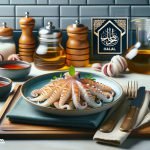
When it comes to dietary laws in Islam, the distinction between halal (permissible) and haram (forbidden) is crucial for the faithful. Seafood, in general, is considered halal, but specific questions often arise regarding certain types of sea creatures, such as squid. This article explores the Islamic perspective on whether eating squid is halal or haram. By delving into religious texts, scholarly interpretations, and the biological nature of squid, we aim to provide a clear and comprehensive understanding of its status within Islamic dietary laws. Join us as we navigate through this intriguing topic to bring clarity for those seeking to adhere to their religious dietary restrictions. Click to get more information about halal vs haram topics discussed in today’s world.
Squid in Islam: Scholarly Permissibility Views
The Islamic dietary law determines whether a food is halal (permissible) or haram (forbidden). The status of seafood, including squid, varies among scholars due to differences in the interpretation of religious texts. The general consensus among the Sunni schools of thought (Hanafi, Shafi’i, Maliki, and Hanbali) is that nearly all seafood, including squid, is halal. This is based on the Quranic verse which states, “Lawful to you is the game from the sea and its food as provision for you and the travelers” (Quran 5:96).
However, the Hanafi school is slightly stricter, allowing the consumption of only fish, excluding shellfish such as crabs, oysters, and squid, unless in necessity. Contrarily, the Jafari (Shi’a) school holds that certain types of seafood, including squid, are permissible without reservation. This divergence largely hinges on how scholars interpret what constitutes “fish” and the prophetic traditions detailing permissible foods. Thus, for a Muslim considering eating squid, the ruling can depend significantly on their adherence to specific scholarly teachings within Islam.
Is Squid Halal? Insight into Islamic Dietary Laws
In Islamic dietary law, determining whether squid is halal or haram is subject to interpretation by religious scholars. The primary source of Islamic law, the Quran, states that all seafood is permissible: “Lawful to you is the hunting of sea animals and their use for food” (Quran 5:96). However, interpretations can vary among different Islamic schools of thought.
Most Sunni scholars, following the Shafi’i, Maliki, and Hanbali schools, consider all forms of seafood, including squid, to be halal. This broad permissibility is due to a hadith where the Prophet Muhammad states, “Its water is pure and its dead are lawful” (Sunan Ibn Majah, 4126). In contrast, Hanafi scholars typically restrict permissible sea creatures to fish exclusively, categorizing squid as makruh (discouraged) rather than outright haram. Consequently, the consumption of squid by Muslims may largely depend on which jurisprudential school they follow or personal religious convictions.
Conclusion
In conclusion, the question of whether eating squid is halal or haram in Islam does not have a universally agreed-upon answer and largely depends on which Islamic jurisprudential school a person follows. Most Sunni scholars, representing schools like the Shafi’i, Maliki, and Hanbali, view all seafood, including squid, as halal based on interpretations of the Quran and Hadith. On the other hand, the Hanafi school is more restrictive, often classifying squid as makruh, or discouraged. For Shia Muslims, following the Jafari school, squid is typically considered permissible without reservations. Thus, Muslims seeking to adhere to dietary laws should consult their local religious authorities or follow the teachings specific to their school of thought to make informed dietary choices regarding the consumption of squid.