
Islamic Dream Interpretation









Most Seen Dreams by Muslims

Seeing & Drinking Water in Islamic Dream

Dream Interpretation of Seeing Insects in Islam

Dream Interpretation of Snake Bite In Islam

Seeing Car Accident in Dream Islam
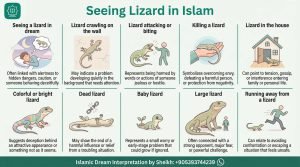
Dream Interpretation of Seeing Lizard in Islam

Seeing Baby in Islamic Dream

Dream Interpretation of Seeing Cats in Islam

What Does Seeing Dog Attack in Islamic Dream Mean?

What Does Seeing Cow Mean in an Islamic Dream?
Islamic Dream Meaning Directory

Dream of Saving a Child from Danger Islam

Seeing Crying Baby in Dream Islam

Bathing a Baby Boy in Dream Islamic Interpretation

Dream of Baby Walking for First Time in Islam

Sick Baby in Dream Islamic Interpretation

Playing With Baby in Dream Islam

Seeing Small Child in Dream Islam

Grey Cat Dream Meaning Islam

Angry Cat in Dream Meaning Islam

Seeing Cat Crying in Dream Islam

Poop Coming Out of Mouth Dream Islam

Seeing Diarrhea in Your Dream Islam

Pooping in Pants Dream Meaning Islam

Seeing Poop in Toilet Dream Meaning in Islam

Touching Feces in Dream meaning Islam

Eating Poop in Dream Meaning Islam

Poop on Clothes Dream Meaning Islam

Cleaning Poop in Dream Islam

killing a lion in dream islamic interpretation

Watching Lion in Dream Islam

Types of Dreams in Islam
What Is Islamic Dream Interpretation?
Islamic dream interpretation, known in Arabic as taʿbīr al-ruʾyā, refers to the interpretation of dreams within an Islamic framework. It draws an important distinction between guidance established by the Qur’an and authentic Hadith and the symbolic interpretations found in later and classical Islamic literature.
Islam does not teach that every dream is a message from Allah or that every symbol has one fixed meaning. The Prophet Muhammad ﷺ taught that dreams can have different origins, and therefore a dream should not automatically be treated as a prediction of the future or as a religious instruction.
The Prophet ﷺ described a good dream as being among the remnants of prophethood. In Sahih al-Bukhari, a righteous dream is described as one of the forty-six parts of prophethood. This gives good dreams a recognized place in Islamic tradition without making every ordinary dream spiritually significant.
A Religious Framework, Not a Method of Predicting the Future
Islamic dream interpretation should be approached with humility. The Qur’an and Sunnah establish that some dreams may be meaningful, but they do not provide a universal dictionary in which every object, animal, color, or action has one predetermined interpretation.
Classical Muslim interpreters developed methods for understanding dreams by considering symbolism, circumstances, the dreamer’s situation, and the details of the vision. These interpretations belong to the scholarly and literary tradition of dream interpretation; they should not automatically be presented as direct teachings of the Qur’an or the Prophet ﷺ.
This distinction matters. A statement such as “a particular animal always means an enemy” is much stronger than the evidence usually allows. A more responsible approach is to say that some classical interpretations associate the symbol with a particular idea, while recognizing that another interpretation may be more appropriate depending on the dream and the person who experienced it.
Why Context Matters
The same dream image can carry very different implications depending on what happens in the dream and how the dreamer experiences it. Seeing an object from a distance is not necessarily equivalent to holding it. Being chased is different from calmly observing something, and a frightening dream should not automatically be interpreted as a warning about a real-world event.
For this reason, a careful interpretation considers factors such as the dreamer’s emotions, the symbol’s behavior, the setting, the relationship between the dreamer and the symbol, and whether the dream resembles something the person has recently been thinking about or experiencing.
Dream Interpretation in the Qur’an and Hadith
The Qur’an contains several significant accounts involving dreams. These accounts demonstrate that meaningful dreams exist in Islamic scripture, but they also show why prophetic dreams should not simply be treated as a model for interpreting every person’s dream.
The Dream of Prophet Yusuf
One of the clearest Qur’anic examples appears in Surah Yusuf, verse 12:4. Prophet Yusuf described a dream in which he saw eleven stars, the sun, and the moon prostrating to him. The dream was later connected with events in his life and was ultimately fulfilled.
The story is especially important because the Qur’an presents Yusuf as having been given knowledge of dream interpretation. It therefore establishes that interpreting a meaningful dream can be a form of knowledge granted by Allah, while not suggesting that every Muslim can confidently decode dreams or that every dream has a hidden prophecy.
The later events of the same story also show the importance of context and interpretation. The king of Egypt saw a symbolic dream involving seven fat cows and seven lean cows, followed by seven green ears of grain and others that were dry. Yusuf interpreted the vision in relation to years of prosperity followed by famine. The account illustrates interpretation as a contextual act rather than a simple symbol-for-symbol dictionary.
The Dream of Prophet Ibrahim
The Qur’an also recounts the dream of Prophet Ibrahim in Surah As-Saffat, 37:102. Ibrahim told his son that he had seen in a dream that he was sacrificing him. The passage presents this as part of a prophetic test and command, making it fundamentally different from an ordinary person’s dream.
This distinction is essential. Prophets received revelation and divine instruction in a manner that cannot simply be transferred to ordinary dreams today. A personal dream cannot establish a new religious obligation or override the Qur’an and Sunnah.
What Does the Hadith Say About Dreams?
The Hadith provide a clearer framework for understanding how Muslims should respond to dreams. They indicate that dreams are not all of one kind and that a disturbing dream should not be allowed to cause unnecessary fear.
Good Dreams
The Prophet ﷺ said that a good dream is from Allah and that a righteous dream is part of the forty-six parts of prophethood. The wording appears in the Book of Interpretation of Dreams in Sahih al-Bukhari.
This does not mean that every pleasant dream is necessarily a divine message. Rather, the Hadith gives good dreams a recognized place while maintaining a distinction between a righteous vision and other kinds of dreams.
Disturbing Dreams
The Prophet ﷺ also gave practical guidance for an unpleasant dream. Sahih Muslim reports that when a person sees a dream he dislikes, he should seek refuge with Allah from its evil and from Shaytan and lightly spit toward his left three times. Such a dream should not be treated as a prediction of harm.
Another authentic narration advises that a person who sees a dream he dislikes should not tell it to others. The guidance is particularly reassuring because it teaches the believer not to give a frightening dream unnecessary power over their thoughts or decisions.
Three Ways Dreams Are Commonly Understood in Islam
The Prophetic guidance provides a useful basis for recognizing that dreams can have different origins. In practical terms, a dream may be approached as one of three broad possibilities:
- A good or righteous vision: A dream that brings glad tidings or beneficial insight may be treated positively, while still avoiding certainty about its meaning.
- A disturbing dream: A frightening or upsetting dream may be associated in the Hadith with Shaytan. The recommended response is to seek Allah’s protection rather than obsess over its symbolism.
- A reflection of personal thoughts: Some dreams can arise from a person’s own concerns, memories, wishes, fears, and experiences. Not every detailed or vivid dream therefore requires a spiritual interpretation.
This framework is more useful than assuming that every dream contains a coded message. It also explains why two people can experience similar imagery while arriving at very different interpretations.
Classical Islamic Dream Interpretation
Muslim scholars and writers produced extensive literature about dreams, including works associated with figures such as Ibn Sirin, al-Nabulsi, and Ibn Shaheen. These works are important for understanding the history of Islamic dream interpretation, but their interpretations should be distinguished from direct Qur’anic or Prophetic statements.
Attributions to individual scholars also require care. Not every dream interpretation circulating online can reliably be traced to the scholar whose name appears beside it. For this reason, a responsible Islamic dream guide should avoid presenting an uncertain attribution as an established quotation.
Classical interpretations can still be useful when presented honestly. They may offer a traditional association for a symbol, but the association should be described as an interpretation rather than as an absolute Islamic rule.
How Should You Interpret a Dream in an Islamic Context?
A useful starting point is to record the dream while its details are still clear. Then consider the circumstances rather than focusing on a single symbol in isolation.
- Remember the main events. Note what happened, who appeared, where the dream took place, and how it ended.
- Pay attention to your emotions. Fear, relief, happiness, disgust, calmness, or confusion can change how the imagery should be approached.
- Consider your circumstances. Recent worries, relationships, responsibilities, hopes, and experiences may influence dream content.
- Separate established Islamic guidance from later symbolism. A Qur’anic or authentic Hadith teaching has a different level of authority from a symbolic association found in classical literature.
- Avoid certainty. Even when a traditional interpretation seems to fit, it should not be presented as a guaranteed prediction.
- Do not base major religious decisions solely on a dream. A dream cannot create a new religious obligation or make something lawful or unlawful.
Does Every Dream Have a Meaning in Islam?
No. Islamic teachings do not require Muslims to assume that every dream has a hidden spiritual meaning. Some dreams may be good visions, some may be disturbing, and others may reflect ordinary thoughts and experiences.
This is particularly important when a dream is frightening. A disturbing dream is not proof that something bad will happen. The Prophetic response is to seek protection from Allah and avoid dwelling on the dream rather than treating it as a certain forecast.
Can a Dream Predict the Future?
Some dreams described in the Qur’an were connected with future events, particularly in the stories of the Prophets. However, this does not mean that an ordinary person’s dream provides reliable knowledge of the future.
The unseen belongs to Allah, and a dream should not be used to claim certainty about future events. If a dream appears meaningful, it may be considered as a source of personal reflection, but decisions should remain grounded in Islamic teachings, sound judgment, consultation, and real-world evidence.
What If a Dream Is Frightening?
If you wake from a disturbing dream, the most important Islamic response is not to search endlessly for a frightening interpretation. Seek refuge with Allah, lightly spit toward your left three times, and do not spread the dream to others. The Prophetic guidance specifically addresses the fear caused by bad dreams and teaches the believer not to let them cause harm.
If the dream continues to trouble you, it can also be helpful to consider whether recent stress, fear, memories, or circumstances may have influenced what you experienced while sleeping. A troubling dream does not by itself establish that you have received a warning about a particular person or event.
Islamic Dream Interpretation: What the Evidence Can and Cannot Tell You
| Question | What can responsibly be said |
|---|---|
| Does Islam recognize meaningful dreams? | Yes. The Qur’an and authentic Hadith contain examples and guidance concerning meaningful dreams. |
| Does every dream have a spiritual message? | No. Islamic sources distinguish between different kinds of dreams. |
| Does every symbol have one fixed Islamic meaning? | No. Symbolic associations found in classical literature are not automatically universal religious rules. |
| Can dreams establish religious rulings? | No. A personal dream cannot create a new obligation or make something lawful or unlawful. |
| Can a frightening dream guarantee future harm? | No. Prophetic guidance specifically teaches Muslims not to treat disturbing dreams as something that will necessarily harm them. |
| Should a dream always be interpreted by a website? | No. A careful approach recognizes uncertainty and, when appropriate, seeks guidance from a trustworthy and knowledgeable person. |
Sources & Islamic Context
The Qur’anic accounts of dreams in Surah Yusuf and Surah As-Saffat provide important scriptural examples, while the Book of Interpretation of Dreams in Sahih al-Bukhari and the Book of Dreams in Sahih Muslim provide foundational Prophetic guidance. These primary sources should be distinguished from later symbolic interpretations attributed to classical dream interpreters.
Ultimately, Islamic dream interpretation is best approached with balance. A meaningful dream may offer comfort or invite reflection, but no interpreter can know with certainty what Allah intends for a particular individual from a private dream. The safest approach is to respect the Qur’an and authentic Sunnah, recognize the limits of classical symbolism, and avoid turning uncertain interpretations into promises or predictions.

The Science of Dreams in Islam (Ilm al-Ta’bir)
The Islamic science of dreams, known as Ilm al-Taʿbīr, is a respected and specialized field in Islamic scholarship that deals with the interpretation and understanding of dreams based on divine revelation, prophetic teachings, and deep symbolic knowledge. Unlike cultural or psychological dream theories, Ilm al-Taʿbīr is grounded in the Qur’an, Sunnah, and the legacy of righteous scholars.
What Is Ilm al-Ta’bir?
Ilm al-Taʿbīr literally means “the knowledge of expressing or interpreting dreams.” In Islam, this science is more than just deciphering symbols; it is a disciplined and spiritual process that requires religious knowledge, wisdom, and piety. It involves understanding:
- The types of dreams in Islam (true, self-induced, and satanic),
- The symbolic meanings of dream elements,
- The timing, context, and personal state of the dreamer,
- And most importantly, aligning the interpretation with Islamic principles.
This science is not open to speculation or guesswork. It was practiced with reverence and responsibility by the early generations.
Origins of the Islamic Science of Dreams
The roots of Ilm al-Taʿbīr are found in the Qur’an, especially in the life of Prophet Yusuf (peace be upon him). Allah granted him deep understanding of dreams:
“Thus will your Lord choose you and teach you the interpretation of dreams…”
(Qur’an, 12:6)
Prophet Yusuf’s role as a dream interpreter marks the beginning of dream interpretation as a sacred science in Islam.
Later, this knowledge was preserved and expanded upon by major dream scholars in Islam, particularly during the early centuries of Islam.
Types of Dreams in Islam: True, False & Shaytani
In Islamic belief, dreams are not viewed as random thoughts or illusions. Rather, they are part of the human experience that may carry spiritual meaning, psychological reflection, or even external influence. According to authentic hadiths of the Prophet Muhammad ﷺ, there are three main types of dreams in Islam: true dreams, self-induced dreams, and satanic dreams. Understanding these types is essential before seeking any interpretation.
1. True Dreams (Ru’yā Ṣāliḥa)
True dreams in Islam are considered a form of glad tidings from Allah ﷻ. They often carry clear, meaningful content that aligns with Islamic values and may even contain symbolic messages or future insights. The Prophet ﷺ said:
“The most truthful of dreams are those seen at the time of Suhoor (before Fajr).”
(Sahih Muslim)
These dreams may come to pious individuals or even average believers, especially during times of sincerity, hardship, or spiritual openness. A true dream can serve as a reminder, a reassurance, or guidance from Allah.
Signs of a True Dream (Ru’yā Ṣāliḥa)
- Clarity and vivid imagery: The scenes are not foggy or confused; details appear sharp and coherent.
- Narrative consistency: The dream unfolds in an orderly, story-like manner, with fewer illogical jumps.
- Persistence in memory: Upon waking, the dream remains unusually memorable and resistant to fading.
- Inner sense of certainty: The dreamer experiences a distinctive calmness or quiet conviction.
- Occurrence near dawn: Reports in Islamic literature frequently mention the pre-dawn hours as more receptive.
- Absence of intense distress: Unlike nightmares, the dream is not dominated by anxiety or mental turmoil.
- Meaningful symbolism: Dream elements carry symbolic weight and appear open to interpretation.
- Independence from daily residue: The dream does not feel like a simple replay of waking events.
- Potential recurrence: Some true dreams are said to repeat with similar themes or motifs.
- Heightened awareness within the dream: The experience may feel strikingly real or unusually lucid.
2. Self-Induced Dreams (Hadith al-Nafs)
The second category consists of dreams caused by one’s own thoughts, emotions, and experiences. These are often referred to as “false dreams” or “dreams of the nafs (ego/self)”.
The Prophet ﷺ explained that a person may dream about what they frequently think or worry about. For example, if someone spends the day focused on business or exams, they may dream about those exact things. These dreams have no symbolic or divine meaning and do not require interpretation.
Signs of Dreams Arising from the Self (Ḥadīth al-Nafs)
- Fragmented and unstructured flow: Scenes appear disconnected, shifting abruptly without clear logic.
- Replay of daily experiences: Familiar people, places, and conversations resurface almost exactly as remembered.
- Dominance of recent emotions: Stress, worries, fears, or desires from the same day drive the dream’s content.
- Vagueness and low detail: Imagery feels blurred, unstable, or visually indistinct.
- Rapid fading from memory: The dream dissolves quickly after waking, leaving only faint impressions.
- Obvious logical inconsistencies: Events violate ordinary reality in chaotic, unpatterned ways.
- Influence of physical conditions: Hunger, fatigue, discomfort, or illness visibly shape the dream’s direction.
- Constant narrative drift: The storyline changes course repeatedly without meaningful connection.
- Lack of perceived significance: The dreamer senses no message, insight, or symbolic depth.
- Imprint of persistent preoccupations: Subjects occupying the waking mind heavily tend to dominate.
3. Satanic Dreams (Ahlām min al-Shayṭān)
The third type is known as Shaytani dreams, which are from the devil (Shayṭān). These dreams are often disturbing, frightening, confusing, or impure. Their purpose is to cause distress, fear, or despair in the believer.
The Prophet ﷺ said:
“A bad dream is from Shayṭān. If any one of you sees something he dislikes, let him blow to his left three times and seek refuge in Allah. It will not harm him.”
(Sahih al-Bukhari and Muslim)
These dreams should not be narrated to others and must never be interpreted. Instead, the Sunnah advises to:
- Spit lightly to the left three times,
- Say A‘udhu billāhi min ash-shayṭān ir-rajīm,
- Change sleeping position or get up to pray.
Signs of Disturbing or Shayṭānic Dreams
- Induction of intense fear: The dreamer awakens with anxiety, dread, or a racing heartbeat.
- Threatening or pursuit-driven content: Scenes of being chased, falling, attacked, or endangered prevail.
- Sensations of pressure or paralysis: Feelings of heaviness, suffocation, or inability to move or cry out may occur.
- Dark or distressing imagery: The dream atmosphere appears ominous, populated by unsettling figures or environments.
- Severe disorder and tension: The dream lacks stability, unfolding in a chaotic and emotionally charged manner.
- Lingering discomfort after waking: Fear, sadness, or unease may persist beyond the dream itself.
- Absence of meaningful coherence: No clear structure or interpretable symbolism is perceived.
- Abrupt and uneasy awakening: The sleeper startles awake with a sense of shock or disturbance.
- Accompanying feelings of despair: The emotional tone often carries hopelessness or sorrow.
- Recurrent nightmare patterns: Similar distressing themes may repeat over time.

Famous Dream Scholars in Islam
Islamic dream interpretation developed over centuries through Qur’anic examples, Prophetic guidance, and the work of Muslim scholars and writers. Among the names most frequently associated with this tradition are Ibn Sirin, Jaʿfar al-Sadiq, ʿAbd al-Ghani al-Nabulsi, and Ibn Qutaybah.
It is important, however, to distinguish historical dream literature from the Qur’an and authentic Hadith. The works attributed to these scholars can preserve valuable interpretive traditions, but their symbolic explanations should not automatically be treated as direct Islamic teachings or universally applicable rules.
Who Was Ibn Sirin?
Muhammad ibn Sirin is one of the names most strongly associated with early Muslim traditions of dream interpretation. He was a scholar of the early Islamic period whose name became closely connected with taʿbīr al-ruʾyā, or the interpretation of dreams.
Accounts associated with Ibn Sirin emphasize the importance of the dreamer’s circumstances and the details surrounding a vision rather than assuming that one symbol always has one meaning. This traditional approach reflects an important principle of dream interpretation: symbolism can depend on context, language, personal circumstances, and the nature of the dream itself.
Ibn Sirin’s Legacy in Islamic Dream Interpretation
Ibn Sirin’s lasting reputation comes largely from the extensive body of dream-interpretation material transmitted under his name. In this tradition, interpreting a dream involves more than matching an image to a predetermined definition. The circumstances of the dreamer and the wider context of the vision may affect how a symbol is understood.
This makes caution particularly important. A traditional interpretation should be presented as a possible reading rather than as certain knowledge of what Allah intends for an individual. Islamic sources do not establish a universal dream dictionary in which every object, animal, person, or event has one fixed meaning.
The Ibn Sirin Dream Book
Muntakhab al-Kalam fi Taʿbir al-Ahlam is among the works widely associated with Ibn Sirin and is well known in the later literature of Islamic dream interpretation.
However, attribution requires care. The surviving dream books circulated under Ibn Sirin’s name are not necessarily identical to a work personally authored and preserved by him in its present form. Historical questions surrounding the transmission and attribution of dream-interpretation manuscripts have therefore remained important when assessing this literature.
The value of the Ibn Sirin tradition lies in its historical influence on Muslim approaches to dream symbolism. It is best read as part of the classical interpretive tradition rather than as a collection of guaranteed predictions or direct Prophetic teachings.
Who Was Jaʿfar al-Sadiq?
Jaʿfar ibn Muhammad, commonly known as Jaʿfar al-Sadiq, was an influential scholar and member of the Prophet Muhammad’s ﷺ family. He is remembered in Islamic intellectual history for his scholarship and spiritual influence.
His name is also frequently connected with collections of dream interpretations. Yet, as with other classical figures, claims about specific dream books attributed to him require historical caution. The existence of a later compilation bearing his name does not by itself establish that every interpretation in that compilation originated directly from him.
Traditions Associated with Jaʿfar al-Sadiq
Dream interpretations attributed to Jaʿfar al-Sadiq are often presented as layered readings in which a single dream image may have several possible associations. Such material can encourage readers to consider the dreamer’s circumstances rather than assuming that symbolism operates mechanically.
These traditions are particularly relevant when studying the development of Islamic dream literature, but they should remain distinct from established Qur’anic and Prophetic teachings. A symbolic interpretation attributed to Jaʿfar al-Sadiq should therefore be identified as a traditional attribution rather than presented as an unquestionable religious rule.
The Jaʿfar al-Sadiq Dream Book
Compilations published under titles such as Taʿbir al-Ruʾya ʿan al-Imam Jaʿfar al-Sadiq have contributed to the popularity of dream interpretations associated with Jaʿfar al-Sadiq.
Because the historical attribution of such collections is not always straightforward, they are better understood as part of a transmitted interpretive tradition. Their symbolic material may be useful for exploring how later Muslims understood dreams, but it should not be confused with revelation or authenticated Hadith.
Who Was ʿAbd al-Ghani al-Nabulsi?
ʿAbd al-Ghani al-Nabulsi was a prominent Ottoman-era Muslim scholar, Sufi, poet, and writer. He lived in Damascus and produced works covering religious, literary, and spiritual subjects.
Among his many interests was the interpretation of dreams. His work became particularly influential because it organized a large body of symbolic material and connected dream imagery with language, cultural associations, religious concepts, and the circumstances surrounding the dream.
Al-Nabulsi’s Legacy in Dream Interpretation
Al-Nabulsi’s approach represents a mature stage in the development of classical Islamic dream literature. Rather than treating symbols as completely isolated signs, his interpretations frequently consider linguistic associations, traditional symbolism, and the circumstances in which an image appears.
His work remains valuable for understanding the history of Islamic dream interpretation. At the same time, readers should distinguish his conclusions from Qur’anic verses and authentic Prophetic statements. A classical interpretation can provide a traditional perspective without constituting a binding religious judgment.
The Al-Nabulsi Dream Book
Al-Nabulsi’s best-known work on dreams is Taʿtir al-Anam fi Taʿbir al-Manam. It became one of the better-known works in the classical literature of Islamic dream interpretation.
The book contains extensive discussions of dream symbols and their possible meanings. Its approach demonstrates how classical interpreters could draw upon Arabic language, metaphor, religious concepts, customary associations, and the circumstances of the dreamer.
Its importance is therefore both practical and historical. It can help readers understand how premodern Muslim scholars approached dreams, but individual interpretations should not be presented as certain predictions or as rules established directly by the Qur’an and Sunnah.
Who Was Ibn Qutaybah?
ʿAbdullah ibn Muslim Ibn Qutaybah was a major literary scholar and writer of the third Islamic century. He is especially remembered for his contributions to Arabic language, literature, theology, and the study of meaning.
Although Ibn Qutaybah is not generally identified primarily with dream interpretation in the same way as Ibn Sirin or al-Nabulsi, his work is relevant to the broader intellectual history of symbolic interpretation because of its attention to language, expression, and context.
Ibn Qutaybah’s Contribution to Dream Literature
Ibn Qutaybah’s analytical interest in language and meaning provides useful background for understanding why classical dream interpretation could involve more than a simple list of symbols. Arabic words, metaphors, cultural conventions, and the circumstances of an individual could all affect how an image was understood.
This contextual approach is especially important when reading historical dream literature today. It reminds readers that an interpretation taken from a classical text may have been shaped by the language and society of its original audience and may not automatically apply in exactly the same way to a modern dreamer.
The Ibn Qutaybah Dream Book
A work known as Taʿbir al-Ruʾya is associated with Ibn Qutaybah in bibliographic and manuscript traditions. As with other classical dream books, questions surrounding attribution and transmission make it important to distinguish the historical text from claims about the precise origin of every interpretation attributed to its author.
The tradition associated with Ibn Qutaybah is useful for illustrating an analytical approach to dreams in which language, structure, symbolism, and circumstances can all matter. It should nevertheless be read as classical interpretive literature rather than as a source of guaranteed meanings.
How These Dream Scholars Should Be Understood
The famous names in Islamic dream interpretation do not all have the same historical status or role. Ibn Sirin is strongly associated with early Muslim dream interpretation, Jaʿfar al-Sadiq is connected with later traditions of symbolic interpretation, al-Nabulsi produced an influential and substantial dream work, and Ibn Qutaybah contributed to the wider intellectual environment of Arabic language and interpretation.
For readers seeking an Islamic interpretation of a dream, the most important distinction is between primary Islamic sources and classical symbolic literature. The Qur’an and authentic Hadith establish the religious framework for understanding dreams, while the writings attributed to later scholars represent attempts to interpret particular symbols and experiences.
Consequently, an interpretation attributed to Ibn Sirin, Jaʿfar al-Sadiq, al-Nabulsi, or Ibn Qutaybah should be treated as a possible traditional interpretation rather than an infallible answer. The dreamer’s circumstances, emotions, personal experiences, and the details of the dream may all affect its significance.
Are Classical Dream Interpretations Always Accurate?
No classical dream book should be treated as a guaranteed prediction system. Even when a particular interpretation has a long history, its presence in a traditional collection does not make it universally applicable to every Muslim who experiences the same symbol.
There is also an important historical issue: some works commonly attributed to famous scholars were transmitted or compiled after their lifetimes, and attribution can be difficult to establish with certainty. Responsible Islamic dream interpretation should therefore avoid presenting disputed material as though it were unquestionably authored by a particular scholar.
The safest approach is to use classical interpretations as contextual possibilities, while giving greater religious authority to the Qur’an and authentic Sunnah and avoiding claims of certainty about the unseen.
What Can You Learn From the Classical Dream Scholars?
- Context matters: A symbol should not automatically be interpreted without considering the dream and the dreamer’s circumstances.
- Symbols can have multiple associations: Classical literature does not always treat imagery as having one universal meaning.
- Language matters: Arabic expressions, metaphors, names, and cultural associations can influence traditional interpretations.
- Attribution requires caution: Not every interpretation circulating under a famous scholar’s name can be assumed to be authentically his.
- Interpretation is not revelation: A classical scholar’s interpretation should not be placed on the same level as the Qur’an or an authentic Hadith.
- Certainty should be avoided: A dream interpretation is not a guaranteed statement about what will happen in the future.
Sources & Islamic Context
The classical works associated with Ibn Sirin, Jaʿfar al-Sadiq, al-Nabulsi, and Ibn Qutaybah form part of the broader history of Muslim dream interpretation. Their writings and the traditions attributed to them can help explain how generations of Muslim scholars approached symbolism, language, and the circumstances of the dreamer.
These materials should, however, remain distinct from the Qur’an and authentic Hadith. Islamic teachings recognize meaningful dreams while also warning against treating every dream as a divine message or using an uncertain interpretation as a religious ruling or guaranteed prediction.
For this reason, the most responsible way to study famous Islamic dream scholars is to appreciate their historical and interpretive contributions while maintaining a clear distinction between revelation, authenticated Prophetic guidance, and later scholarly interpretation.

Why You Shouldn’t Share Every Dream: Islamic Etiquette
In Islam, not every dream should be treated as a message that needs interpretation or shared with others. Prophetic guidance distinguishes between a good dream, a disturbing dream, and experiences that may arise from a person’s own thoughts and concerns. The appropriate response therefore depends partly on the nature of the dream.
The Prophet Muhammad ﷺ taught that a good dream may be shared with someone a person loves or trusts, while a disliked dream should not be widely narrated. In Sahih al-Bukhari, the Prophet ﷺ instructed that a person who sees a dream he likes should tell it only to someone he loves. Other authentic narrations give specific guidance for dealing with dreams that cause distress.
What Should You Do After a Disturbing Dream?
A frightening or unpleasant dream does not automatically mean that something bad will happen. Islamic teachings do not require a person to search for a hidden prediction in every disturbing dream. The Prophet ﷺ described disliked dreams as coming from Shaytan and taught believers how to respond to them rather than becoming preoccupied with their content.
According to Prophetic guidance, if you experience a dream that frightens or disturbs you, you can:
- Seek refuge in Allah from Shaytan and from the harm associated with the dream.
- Spit or blow lightly to your left three times, as described in authentic Hadith.
- Turn to the other side after waking from the disturbing dream.
- Avoid spreading the dream to other people. There is no need to repeatedly recount a frightening dream or ask numerous people to interpret it.
- Do not treat the dream as a certain prediction. A disturbing dream is not proof that an event will occur.
These practices shift the focus away from fear and toward trust in Allah. A person may also return to ordinary, calming activities after waking rather than continuing to dwell on frightening imagery.
Does Every Disturbing Dream Have a Meaning?
No. Islamic sources do not establish that every disturbing dream contains a specific symbolic message. Dreams can have different origins, and the content of a dream alone is not enough to determine its religious significance.
Personal experiences, memories, worries, expectations, and emotions can also influence what a person dreams about. This is compatible with the broader observation that dreaming can involve the processing of memories and emotional experiences, but modern psychological explanations should not be presented as though they were themselves an Islamic classification of dreams.
For this reason, a frightening dream should not automatically be interpreted as a warning from Allah, a prediction of future events, or evidence that something supernatural has happened.
Should You Tell Someone About a Good Dream?
The Prophetic guidance is more positive toward good dreams. A pleasant dream may be shared with someone whom you love and trust rather than being announced indiscriminately.
This distinction is important: the Islamic etiquette surrounding dreams is not simply about whether a dream is “interesting.” It concerns how a person responds to what they have seen and whether sharing it is likely to be beneficial, reassuring, or appropriate.
Even a good dream should not automatically be treated as a guaranteed prophecy. Its interpretation, when interpretation is appropriate at all, remains subject to context and uncertainty.
When Is It Appropriate to Seek Dream Interpretation?
Seeking an informed interpretation may be reasonable when a dream is memorable, meaningful to you, or contains details that you genuinely want to understand within the Islamic tradition. However, interpretation should be approached with humility rather than certainty.
- The dream remains significant to you after waking and you want to understand its possible symbolism.
- The imagery is unusually clear or connected to an important situation in your life.
- You want an interpretation grounded in Islamic sources rather than superstition or arbitrary symbolism.
- You understand that an interpreter can offer a possible reading, not certainty about the unseen.
A qualified and trustworthy interpreter should therefore avoid claiming to know exactly what Allah intends for a particular individual. Dream interpretation is not a substitute for Islamic law, sound judgment, prayer, or consultation with appropriate scholars when a religious ruling is actually required.
When Should You Avoid Looking for an Interpretation?
If a dream is simply frightening, confusing, or emotionally disturbing, repeatedly searching for meanings may not be helpful. The Prophetic response to disliked dreams emphasizes seeking refuge in Allah and not dwelling on or spreading the dream.
Likewise, a person should be cautious about websites, social media accounts, or interpreters that assign one fixed meaning to every symbol. Classical dream literature contains symbolic interpretations, but those interpretations should not be confused with explicit Qur’anic or Prophetic teachings.
Islamic Guidance vs. Psychological Dream Interpretation
Islamic teachings and modern psychological theories ask different questions about dreams. Islamic sources are concerned, among other things, with the religious classification of dreams and the proper etiquette for responding to them. Psychological approaches generally investigate dreaming through theories of memory, emotion, personality, unconscious processes, or brain activity.
| Islamic approach | Psychological approaches |
|---|---|
| Distinguishes between different types of dreams and provides guidance on how to respond to them. | Examines dreams through psychological, cognitive, neurological, or personality-based frameworks. |
| Recognizes that some good dreams may have spiritual significance while not treating every dream as revelation. | Usually seeks explanations in mental processes, emotional experiences, memory, or theories of the mind. |
| Uses the Qur’an and authentic Hadith as the primary sources for religious guidance about dreams. | Uses psychological theories and empirical research rather than religious revelation as its evidentiary framework. |
| Places importance on etiquette, including how a person responds to a disturbing dream and whether it should be shared. | May explore what recurring or emotionally intense dreams could reveal about thoughts, experiences, or psychological processes. |
It is also important not to oversimplify Western thought. Freud and Jung developed different theories of dreams, and neither should simply be summarized as claiming that all dreams are identical forms of subconscious brain activity. Their theories belong to a different intellectual framework from Islamic dream interpretation.
Psychological perspectives can sometimes help a person reflect on emotions, memories, or recurring concerns, but they do not replace the Islamic sources used to establish religious guidance about dreams.
What Islam Does Not Teach About Disturbing Dreams
There is no sound basis for telling someone that a frightening dream definitely means that a specific disaster, illness, death, betrayal, or other event will happen. Such certainty goes beyond what the dream itself can establish.
Likewise, not every unusual image should be described as a divine message. The unseen belongs to Allah, and a dream interpreter should be careful not to claim knowledge that the available evidence does not provide.
A more responsible approach is to ask what Islamic sources actually establish, consider the dreamer’s circumstances, and distinguish authentic religious guidance from interpretations found in later symbolic literature.
Why Repeatedly Sharing a Disturbing Dream Can Be Unhelpful
From an Islamic perspective, the main concern is not simply whether talking about a dream is psychologically harmful. The stronger point is that the Prophet ﷺ specifically taught believers not to spread disliked dreams and instead to seek refuge in Allah.
Repeating the same frightening account to many people can also encourage speculation. One person may offer a reassuring interpretation while another may make an alarming claim, leaving the dreamer more anxious than before. For that reason, it is wiser to follow the Prophetic etiquette rather than seek interpretations from everyone who is willing to offer one.
When to Seek a Knowledgeable Islamic Perspective
If you believe a dream deserves interpretation, look for someone who understands the limits of dream interpretation and does not present speculation as certainty. A responsible interpreter should distinguish between authentic Islamic guidance, classical interpretations, personal context, and unsupported popular symbolism.
At Best Istikhara, our Islamic dream interpretation service aims to approach dreams within an Islamic framework while recognizing that interpretation is not a guaranteed way of knowing the future.
To request a consultation, message us on WhatsApp at +90 539 374 42 39.
Above all, a dream should not become a source of unnecessary fear. When a dream is disturbing, following the Prophetic guidance to seek refuge in Allah and leave the dream without spreading it is more firmly established than attempting to decode every frightening image.
Sources & Islamic Context
The primary Islamic guidance in this article comes from authentic Prophetic teachings concerning good and disliked dreams. Sahih Muslim records the distinction between a good vision and a disliked dream and gives guidance on seeking refuge in Allah after a disturbing dream. The Qur’an also presents dreams as a subject of significance in the story of Prophet Yusuf and Surah Yusuf, while the detailed interpretation of individual symbols belongs largely to later interpretive traditions rather than to explicit Qur’anic rules.