
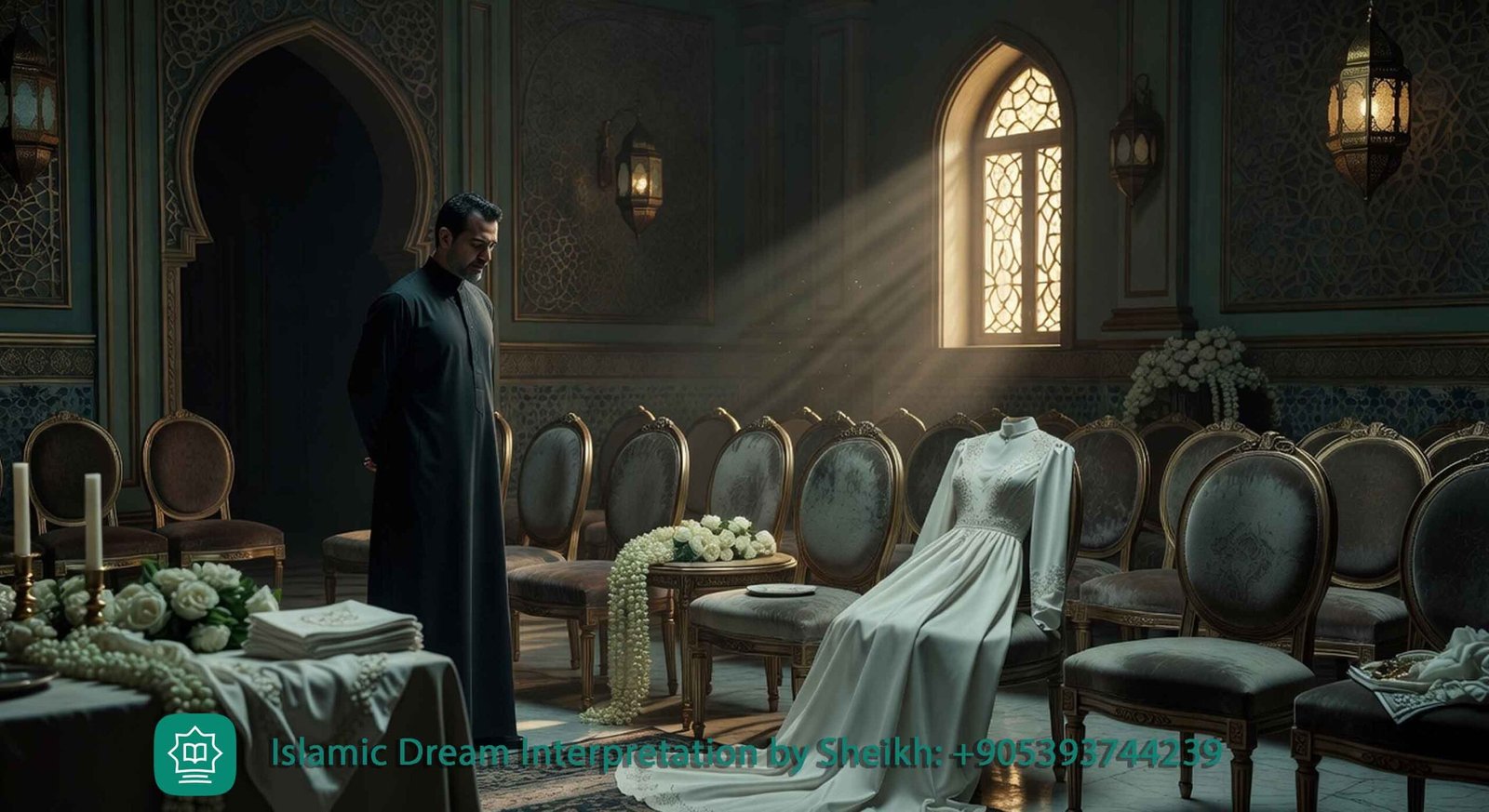
Common Cancelled Wedding Dream Scenarios and Their Meanings in Islam
| Cancelled Wedding Dream Scenario | Possible Islamic Meaning |
|---|---|
| Your own wedding is cancelled | May symbolize delays in achieving an important goal, a need for patience, or a reminder to seek Allah’s guidance before making major life decisions. |
| The bride cancels the wedding | Can reflect hesitation, unresolved emotions, or concerns about commitment that require sincere reflection and prayer. |
| The groom cancels the wedding | May indicate unexpected obstacles, changes in plans, or a warning to reconsider a significant decision with wisdom. |
| Wedding cancelled because of family objections | Often represents family influence, social pressure, or the importance of maintaining harmony while making decisions according to Islamic values. |
| Wedding cancelled at the last moment | May symbolize sudden life changes, postponed opportunities, or divine protection from something that is not beneficial. |
| Cancelling the wedding by your own choice | Can indicate repentance, correcting a wrong path, or consciously avoiding a decision that may lead to regret. |
| A stranger’s wedding is cancelled | May reflect witnessing challenges in the lives of others or serve as a reminder to avoid judging people based on appearances. |
| Feeling relieved after the wedding is cancelled | Suggests release from stress, the end of anxiety, or trust that Allah has planned something better for the future. |
| Feeling sad after the wedding is cancelled | May point to fear of loss, disappointment, or emotional attachment that requires reliance on Allah and patience. |
| Wedding cancelled due to bad weather or an unexpected event | Can symbolize external circumstances beyond your control and the |
Interpretation of Cancelled Wedding Dreams in Islam According to Islamic Scholars
Dreams about a cancelled wedding are not mentioned with a single fixed interpretation in authentic Islamic sources. Instead, Islamic dream scholars explain that the meaning depends on the dreamer’s circumstances, emotions, and the events seen in the dream. A wedding often symbolizes a major life transition, commitment, or a new beginning. Therefore, seeing a wedding cancelled may represent a delay, a change in plans, divine protection from an unsuitable matter, or a reminder to place trust in Allah’s wisdom rather than rushing important decisions.
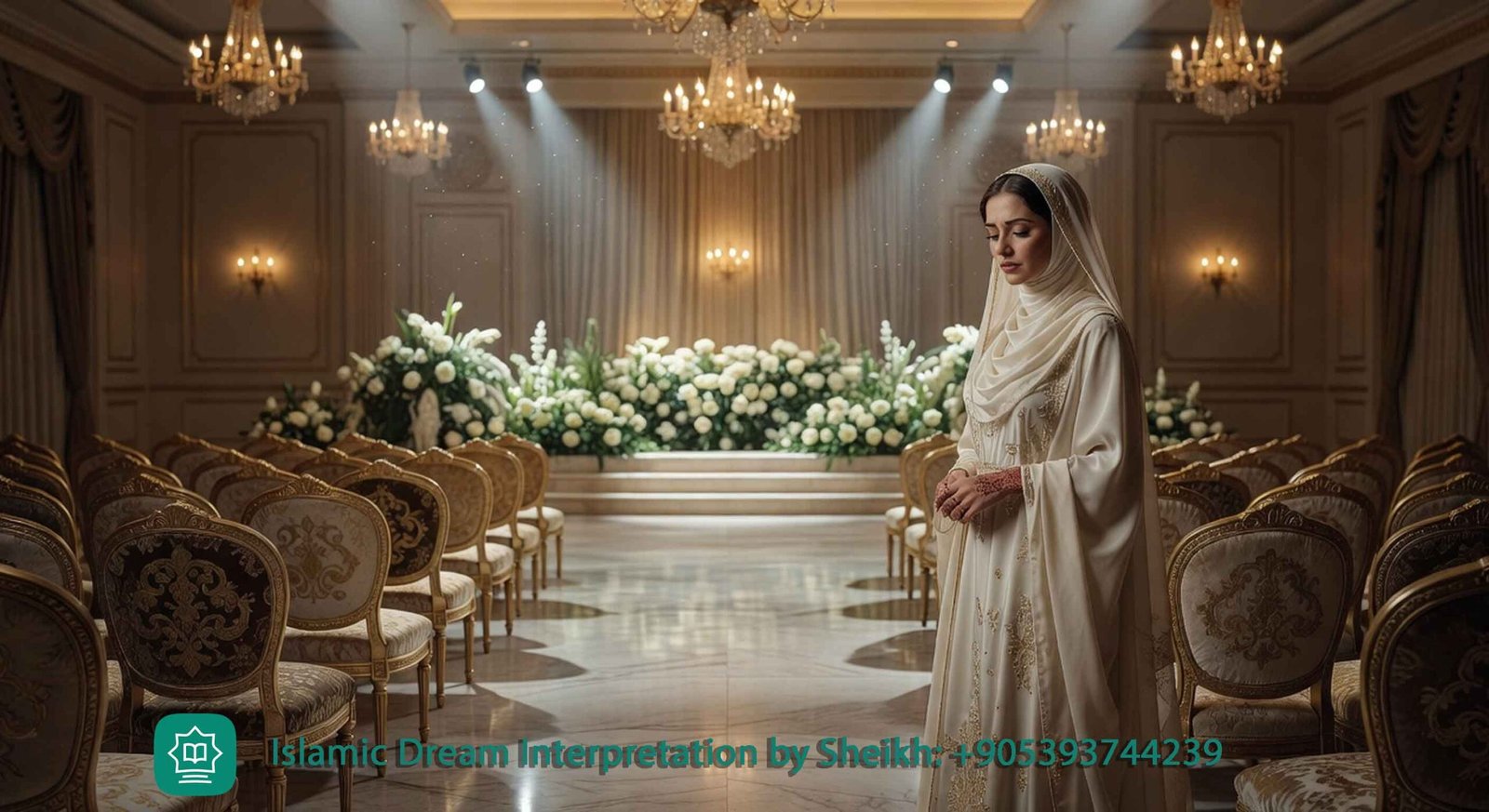
Imam Ja’far al-Sadiq’s Interpretation
According to narrations attributed to Imam Ja’far al-Sadiq (RA), dreams should always be understood in the context of the dreamer’s faith and current situation. Although there is no authentic narration that specifically interprets a cancelled wedding dream, scholars inspired by his principles suggest that such a dream may symbolize:
- A delay in achieving an important goal.
- Protection from a harmful relationship or decision.
- A test of patience before Allah grants something better.
- The need to increase reliance on Allah through prayer and sincere supplication.
If the dream leaves the believer feeling peaceful after waking, it may be viewed as a sign to trust Allah’s decree rather than fear the future.
Prophet Yusuf’s (AS) Perspective
Prophet Yusuf (AS)
is regarded in Islam as the greatest interpreter of dreams because Allah granted him this special knowledge. His approach teaches Muslims that dreams often contain symbolic meanings instead of literal predictions.
From this perspective, a cancelled wedding could represent:
- A temporary obstacle before future success.
- A change in Allah’s plan that ultimately brings greater benefit.
- The removal of something that appears desirable but may not be good for the dreamer.
- An opportunity to strengthen faith during uncertain times.
The story of Prophet Yusuf (AS) reminds believers that apparent setbacks may eventually become blessings through Allah’s wisdom.
Ibn Sirin’s Interpretation
Ibn Sirin
, one of the most respected Islamic dream interpreters, generally associated marriage in dreams with responsibility, change, and new opportunities. While he did not record a direct interpretation for every possible wedding scenario, later scholars drawing from his methodology explain that a cancelled wedding dream may indicate:
- Postponed plans or delayed success.
- Anxiety about making a major life commitment.
- The end of an unsuitable opportunity before it causes harm.
- A reminder to seek Allah’s guidance through Istikhara before making important decisions.
Rather than treating the dream as a definite prediction, Ibn Sirin’s approach encourages Muslims to evaluate their circumstances carefully, strengthen their relationship with Allah, and avoid making life-changing decisions based solely on dreams.
Things You Should Do as a Believer After Seeing a Cancelled Wedding Dream
Seeing a cancelled wedding dream can leave you feeling confused, worried, or even disappointed. However, in Islam, dreams are not considered a guaranteed prediction of the future. A believer should respond to such dreams with faith, wisdom, and trust in Allah rather than fear or anxiety. If the dream carries a positive message, thank Allah for His guidance. If it is disturbing, follow the Sunnah regarding unpleasant dreams and avoid making life-changing decisions based solely on what you saw.
Here are the most important things a Muslim should do after seeing this dream:
- Put your trust in Allah (Tawakkul). Remember that only Allah knows the unseen and controls what will happen in your life.
- Do not assume the dream predicts your marriage or future. Dreams can be symbolic and should never replace Islamic guidance or practical decision-making.
- Recite the recommended supplications before sleeping. Reading Ayat al-Kursi, Surah Al-Ikhlas, Al-Falaq, and An-Nas can bring peace and protection.
- If the dream was disturbing, seek refuge in Allah from Shaytan. The Prophet ﷺ taught Muslims to seek Allah’s protection, lightly spit to the left three times, and avoid sharing frightening dreams with others.
- Increase your duas and istighfar. Asking Allah for guidance, forgiveness, and ease can help remove anxiety and strengthen your faith.
- Pray Salat al-Istikhara before making major relationship or marriage decisions. If you are considering marriage, seek Allah’s guidance instead of relying on dreams.
- Reflect on your current life. Sometimes a cancelled wedding dream reflects personal worries, delayed plans, or emotional stress rather than a spiritual sign.
- Avoid superstitions and fortune tellers. Islamic teachings discourage believing that dreams alone reveal certain future events.
- Consult a knowledgeable Islamic scholar if necessary. If the dream continues to trouble you, seek advice from a trusted scholar who follows authentic Islamic teachings.
- Stay hopeful and patient. Many delays are part of Allah’s wisdom, and what appears to be a setback today may become a blessing tomorrow.
Ultimately, a believer’s response to a cancelled wedding dream in Islam should be guided by patience, prayer, and reliance on Allah. Dreams may encourage self-reflection, but true success comes from following the Qur’an, the Sunnah, and making decisions with sincerity, wisdom, and trust in Allah’s perfect plan.
What Does a Cancelled Wedding Symbolize in Islamic Dream Interpretation?
In Islamic dream interpretation, a cancelled wedding is generally viewed as a symbol rather than a literal prediction. Since marriage in dreams often represents commitment, responsibility, new beginnings, or significant life changes, seeing the wedding cancelled may indicate that something in your life is being delayed, redirected, or protected by Allah’s wisdom. The true meaning depends on your personal circumstances, emotions during the dream, and your relationship with Allah.
A cancelled wedding dream may symbolize one or more of the following:
- A delay rather than a denial. The dream may suggest that an important goal—whether related to marriage, work, or personal growth—is postponed until the right time determined by Allah.
- Divine protection. Sometimes what appears to be a disappointment may actually be Allah preventing you from entering a situation that could harm your faith or future.
- Uncertainty about a major decision. If you are facing an important choice, the dream could reflect your inner hesitation and encourage you to seek Allah’s guidance through prayer and Istikhara.
- A period of testing and patience. Islam teaches that believers are tested in different ways. A cancelled wedding in a dream can symbolize the need for patience before receiving something better.
- Emotional healing or personal growth. The dream may indicate that you need time to overcome past experiences or prepare yourself before entering a new stage of life.
- A reminder to rely on Allah instead of worldly expectations. If you have been worrying excessively about marriage or the future, the dream may encourage you to place your trust in Allah’s perfect plan.
It is also important to remember that not every dream carries a spiritual message. Some dreams are influenced by daily thoughts, personal stress, or emotional concerns. For example, someone who is planning a wedding or thinking frequently about relationships may naturally dream about wedding-related events without any hidden meaning.
From an Islamic perspective, believers should avoid assuming that a cancelled wedding dream predicts failure or bad news. Instead, it should be taken as an opportunity for self-reflection, increased worship, sincere dua, and trust in Allah’s wisdom. Whatever Allah delays, changes, or replaces is always according to His perfect knowledge, even if its purpose is not immediately clear.
Misconceptions About Cancelled Wedding Dreams in Islamic Dream Interpretation
Many people believe that seeing a cancelled wedding dream is a definite sign that a real marriage will not happen or that bad luck is coming. However, this is not the Islamic view. In Islam, dreams are not considered certain predictions of the future, and their meanings depend on the dreamer’s circumstances and the details of the dream.
Another common misconception is that every dream comes from Allah. Islamic teachings explain that dreams may come from Allah, reflect a person’s thoughts and emotions, or be disturbing dreams from Shaytan. For this reason, believers should not make important life decisions based only on a dream.
It is also incorrect to assume that a cancelled wedding dream always has a negative meaning. In some cases, it may symbolize a delay, a change of plans, or even Allah’s protection from something that is not beneficial. The best approach is to respond with patience, make sincere dua, and place trust in Allah rather than worrying about the dream itself.
Conclusion
A cancelled wedding dream in Islam should not be viewed as a certain prediction of future events. Based on the principles of Islamic dream interpretation, it is more likely to symbolize a delay, a change in direction, personal growth, or even Allah’s protection from something that is not beneficial. The meaning of the dream depends on the dreamer’s circumstances, emotions, and faith rather than the dream alone.
The best response after seeing this dream is to strengthen your trust in Allah, increase your prayers and supplications, and avoid making important life decisions based solely on what you have seen in a dream. With patience, sincere worship, and reliance on Allah, every delay can become part of His perfect plan and wisdom.
Similar Dreams You May Have
- Dreaming of a black wedding dress in Islam often symbolizes emotional challenges, uncertainty, or a significant life transition rather than predicting a negative future. The meaning depends on the dreamer’s feelings and personal circumstances. Islamic dream interpretation encourages believers to seek Allah’s guidance and avoid assuming that the dream is a literal sign.
- Seeing yourself wearing a wedding dress in a dream can represent a new beginning, responsibility, hope, or preparation for an important stage of life. In Islamic dream interpretation, the condition and color of the dress, as well as your emotions during the dream, play an important role in understanding its meaning.
- A wedding dream in Islam is commonly associated with commitment, change, responsibility, and major life events. Depending on the details of the dream, it may symbolize blessings, new opportunities, or personal growth. Islamic scholars emphasize that wedding dreams should be interpreted according to the dreamer’s situation rather than as fixed predictions.
- A marriage break up dream in Islam does not necessarily indicate separation in real life. Instead, it may reflect emotional stress, fear of change, unresolved conflicts, or the end of one phase before the beginning of another. Islam teaches believers to respond to such dreams with patience, prayer, and trust in Allah instead of fear.
FAQs
Is a cancelled wedding dream a bad sign in Islam?
Not necessarily. In Islamic dream interpretation, a cancelled wedding dream may symbolize a delay, a life change, or Allah’s protection rather than a bad omen.
Does a cancelled wedding dream mean my marriage will be cancelled?
No. There is no authentic Islamic evidence that such a dream predicts the future. Dreams are often symbolic and should not be taken literally.
What should I do after seeing a cancelled wedding dream?
You should place your trust in Allah, make dua, seek forgiveness, perform Salat al-Istikhara before major decisions, and avoid worrying about the dream itself.
Who can correctly interpret a cancelled wedding dream?
A knowledgeable Islamic scholar may offer guidance based on Islamic principles, but no one can claim absolute certainty about the meaning of every dream.
Can stress cause dreams about a cancelled wedding?
Yes. Islamic teachings acknowledge that some dreams are influenced by a person’s thoughts, emotions, and daily experiences rather than carrying a spiritual message.