
Islamic Scholars’ Views on Seeing Used Clothes in a Dream
Can This Interpretation Be Attributed to Imam Ja’far al-Sadiq?
Detailed interpretations of used clothes are sometimes attributed to Imam Ja’far al-Sadiq, including claims that clean garments indicate positive change while dirty garments point to guilt or repentance. These claims should be treated cautiously rather than presented as his authenticated teaching.
Encyclopaedia Iranica notes that a work on dream interpretation was later attributed to Ja’far al-Sadiq, but the authenticity of works in this group is questionable. For that reason, there is not enough reliable evidence to state that he specifically taught that used clothes represent burdens from the past, repentance, or future improvement.
A safer symbolic reading is that the condition of the clothing may matter: clean and usable second-hand clothes can suggest something from the past that still has value, while dirty, damaged, or unwanted clothing may reflect discomfort with an old situation, responsibility, or memory. These are contextual interpretations, not verified statements from Imam Ja’far al-Sadiq.
What Can Reliably Be Attributed to Muhammad Ibn Sirin?
Ibn Sirin is one of the figures most strongly associated with Islamic dream interpretation, but modern scholarship requires caution with highly specific claims attributed to him. A major classical dream manual was mistakenly circulated under his name for centuries and has now been critically attributed to the later author Abu Sa’d al-Kharkushi. American University of Beirut discusses this attribution directly.
Because of this, statements such as “Ibn Sirin said that wearing used clothes means regret” or “torn second-hand clothes mean financial hardship” should not be presented as established quotations unless a traceable early source supports them.
Symbolically, wearing another person’s old clothes may suggest carrying something connected with the past, adapting to circumstances already shaped by someone else, or reusing something that still has value. Torn or unusable clothing can create a more negative impression, but the dreamer’s feelings and the condition of the garments remain essential to the reading.
Did Prophet Yusuf Give an Interpretation of Used Clothes?
The Qur’an presents Prophet Yusuf as someone whom Allah taught the interpretation of dreams, but it does not record him giving a general interpretation of used or second-hand clothing.
Clothing does appear meaningfully in Surah Yusuf—for example, Yusuf’s shirt plays an important role at several points in the story—but those events are part of the Qur’anic narrative, not a dream dictionary for clothing symbols. Therefore, claims that Prophet Yusuf taught that used clothes mean “renewal,” “redemption,” or “blessings after hardship” should not be attributed to him without evidence.
Used clothing may still be interpreted symbolically in relation to past experiences, identity, responsibility, or something being carried forward from an earlier stage of life, but that should be presented as a later contextual reading rather than as a teaching of Prophet Yusuf.
Different Conditions of Seeing Used Clothes in a Dream
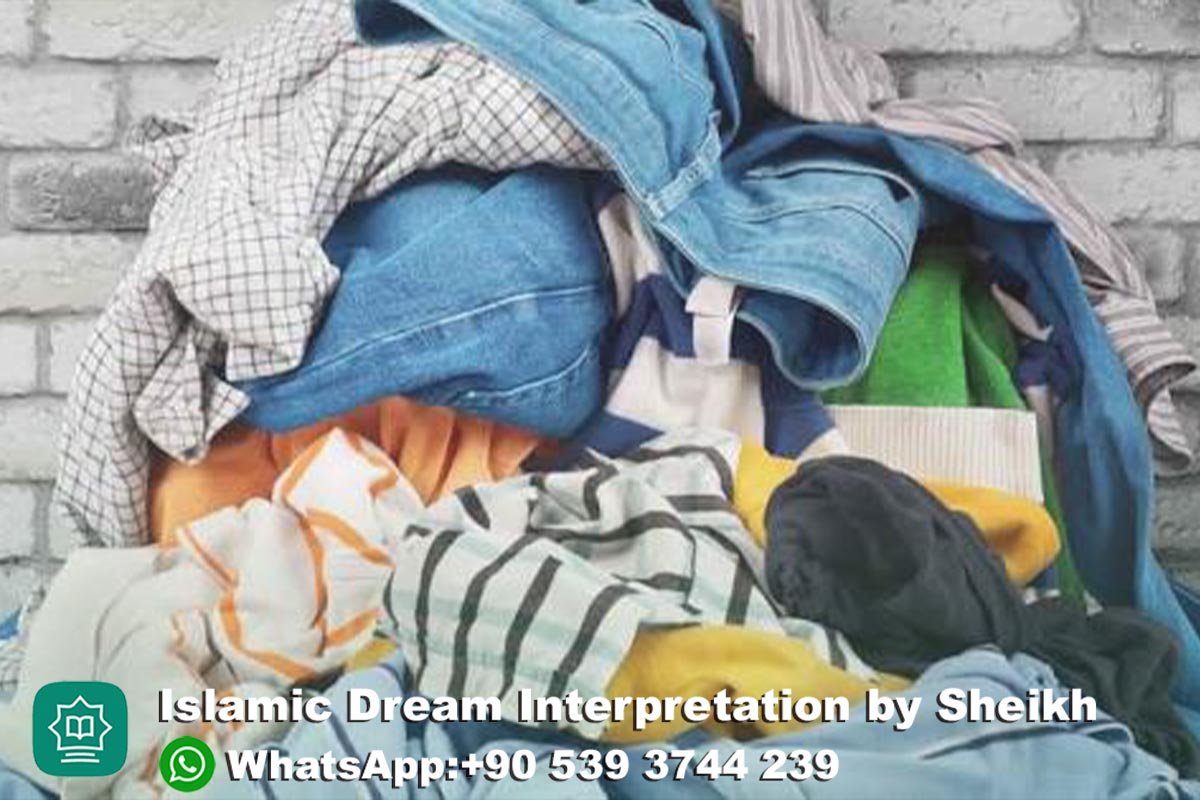
The meaning of used clothes in a dream depends heavily on their condition, who they belonged to, what you did with them, and how you felt. Clean and usable clothes can create a very different impression from dirty, torn, unwanted, or uncomfortable garments. The scenarios below are best treated as symbolic possibilities rather than fixed Islamic interpretations.
Wearing Used Clothes in a Dream
Wearing used clothes may suggest returning to an old role, habit, memory, or situation. If the clothes fit well and feel comfortable, the dream may reflect accepting something from the past that still has value.
If the clothes are torn, stained, uncomfortable, or clearly unwanted, the dream may instead reflect dissatisfaction with an old situation or the feeling that something from the past no longer suits your present life.
The identity of the previous owner can also matter. Wearing clothes associated with someone you know may reflect your relationship with that person, their influence on you, or qualities you associate with them.
Receiving Used Clothes in a Dream
Receiving used clothes may symbolize accepting something that comes with a history. This could be a responsibility, opportunity, habit, piece of advice, or emotional connection rather than a literal inheritance.
Well-kept clothes that you are happy to receive may suggest that something passed on to you remains useful or meaningful. Clothes that are dirty, damaged, or given unwillingly may instead reflect discomfort about taking on another person’s expectations, responsibilities, or unresolved issues.
It is too specific to say that receiving used clothes necessarily predicts an inheritance. The surrounding details should guide the reading.
Washing Used Clothes in a Dream
Washing old or used clothes naturally creates an image of cleaning, restoring, or preparing something from the past for renewed use. Symbolically, this may suggest trying to correct an old mistake, repair a relationship, improve a situation, or change how you deal with a past experience.
Although cleanliness has strong positive associations in Islam, washing used clothes in a dream should not automatically be described as proof of repentance or forgiveness. If repentance is already an important issue in the dreamer’s life, that reading may be personally relevant, but it remains contextual rather than fixed.
Giving Used Clothes in a Dream
Giving used clothes away may reflect letting go of something you no longer need or passing something useful on to another person.
If the clothes are clean and valuable, the dream may suggest generosity, sharing experience, or making something beneficial available to someone else. If the clothes are damaged or unwanted, the dream may instead raise the question of whether you are trying to pass a problem, responsibility, or burden on to someone else.
The dream should not automatically be classified as an act of charity simply because clothes are being given away. Your intention and the recipient’s response matter.
Selling Used Clothes in a Dream
Selling used clothes may symbolize trying to gain value from something connected with the past. This could relate to previous experience, an old possession, a skill, or a situation you are ready to leave behind.
The emotional tone matters. Feeling relieved after the sale may suggest closure, while regret may point to concern that you gave up something that still mattered to you. If you struggled to find a buyer, the dream may reflect difficulty moving on rather than a financial prediction.
Buying Used Clothes in a Dream
Buying used clothes can suggest choosing to take on something that already has a history. This may represent adopting an old idea, returning to a previous way of living, learning from someone else’s experience, or accepting a responsibility that did not begin with you.
Clean, suitable clothes may make this choice feel useful or practical. Dirty, damaged, or ill-fitting clothes may reflect concern that you are taking on something unsuitable simply because it is available or familiar.
Rather than interpreting this as automatically “inheriting someone else’s problems,” ask whether the purchase felt wise, necessary, exciting, or regrettable.
Throwing Away Used Clothes in a Dream
Throwing away used clothes may suggest ending your connection with something from the past. This can include an old habit, relationship, role, memory, or obligation.
If you felt relief, the dream may reflect readiness to move forward. If you regretted throwing the clothes away, the image may instead point to uncertainty about leaving something behind.
It is better to describe this as letting go symbolically rather than automatically calling it spiritual cleansing or a guaranteed new beginning.
Finding Used Clothes in a Dream
Finding used clothes may bring attention back to something forgotten, neglected, or left behind. If the clothes are useful and familiar, the dream may suggest rediscovering a skill, memory, relationship, or opportunity that still has value.
If the clothes are damaged, dirty, or associated with discomfort, the dream may instead reflect the return of an unresolved issue or an old concern.
If you recognized who the clothes belonged to, that detail may be more important than the clothes themselves, because the dream could be connected to that person’s influence, memory, or role in your life.
Common Misunderstandings About Used Clothes Dreams
- “Used clothes always mean poverty.” There is no authentic Qur’anic or Prophetic text establishing second-hand clothing in a dream as a sign of poverty or financial decline. The condition of the clothes, whether you wanted them, and how you felt while wearing or receiving them matter far more than the fact that they were previously used.
- “Dirty used clothes prove that the dreamer has sinned.” Stained or unpleasant clothing may create a negative symbolic impression, but it should not be treated as evidence of a specific sin, guilt, or divine judgment. A dream cannot establish a person’s spiritual condition with certainty.
- “Receiving someone’s old clothes means you will inherit their problems.” That is too literal. If the clothes belonged to someone you know, the dream may reflect your relationship with that person, their influence on you, or something you associate with them. It does not prove that their difficulties will pass to you.
- “Throwing away old clothes guarantees a fresh start.” Discarding something old can naturally suggest letting go, but the dream does not guarantee that a difficult period has ended. Relief, regret, hesitation, or attachment during the dream can all change the reading.
- “Any interpretation attributed to Ibn Sirin or Imam Ja’far al-Sadiq must be authentic.” Many highly specific dream interpretations circulate online under famous Islamic names without a reliable early source. The attribution itself should therefore be checked before it is treated as an established Islamic teaching.
The safest approach is to treat used clothing as a context-dependent symbol rather than a fixed prediction. Who owned the clothes, their condition, whether they fit, what you did with them, and your emotional response usually provide more useful clues than the label “used clothes” alone.