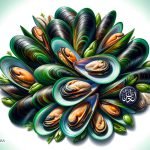
The concept of halal (permissible) and haram (forbidden) in Islamic dietary laws is deeply rooted in religious texts, primarily the Quran and Hadith. Halal dietary guidelines dictate what is permissible for Muslims to consume, encompassing food and drink. These guidelines are about following religious duties and ensuring that what is consumed is pure, healthy, and ethically sourced. Determining whether a particular food is halal involves understanding its nature, how it is sourced, and its preparation. With seafood, particularly mussels, various interpretations exist among Islamic schools of thought, leading to debates and discussions on their permissibility. This article delves into these interpretations, aiming to provide a comprehensive understanding for those seeking clarity on whether mussels are halal. Click to get more information about halal vs haram topics discussed in today’s world.
The Halal Status of Seafood
In Islamic dietary law, the permissibility of seafood varies among different schools of thought. Generally, seafood is considered halal, with some conditions. The Quran explicitly states that all that comes from the sea is lawful, as highlighted in Surah Al-Ma’idah (5:96), which mentions that the catch from the sea and its food are made lawful for consumption.
However, interpretations differ among Islamic scholars. The Hanafi school, for instance, restricts halal seafood to fish with scales, thus excluding shellfish such as mussels, shrimp, and crabs. In contrast, the Shafi’i, Maliki, and Hanbali schools adopt a more inclusive approach, permitting consuming all types of seafood, including shellfish, as they fall under the general permissibility granted in the Quran.
These differences stem from varying interpretations of religious texts and the application of hadiths (sayings of the Prophet Muhammad). While the Hanafi school emphasizes stricter criteria based on specific characteristics of fish, the other schools focus on broader Quranic guidelines that do not explicitly forbid any sea creatures except those harmful or poisonous. Understanding these nuances is essential for Muslims who adhere to dietary restrictions while navigating different scholarly opinions.
Are Mussels Halal? A Comprehensive Analysis
The Quran explicitly mentions the permissibility of seafood in Surah Al-Ma’idah (5:96): “Lawful to you is the game from the sea and its food as provision for you and the travelers…” This verse indicates that all sea creatures are generally considered halal. Additionally, the Prophet Muhammad is reported in various hadiths to have permitted the consumption of sea animals, emphasizing that dead sea animals do not require the same slaughtering process as land animals.
Perspectives from Different Islamic Jurisprudence Schools
The Hanafi school is more restrictive, allowing only fish with scales, thus excluding shellfish like mussels. Hanafis base their interpretation on hadiths that classify lawful sea creatures as “samak” (fish), which traditionally meant only scaled fish.
In contrast, the Maliki, Shafi’i, and Hanbali schools have a more inclusive view. They permit all types of sea creatures, including mussels, based on the broad Quranic permission of seafood and hadiths that do not specify restrictions beyond harmful or poisonous creatures. These schools interpret “samak” more broadly to include all sea animals, aligning with the principle that everything from the sea is halal unless explicitly forbidden.
Why Some Scholars Consider Mussels Haram?
Some scholars consider mussels haram due to their interpretation of Islamic dietary laws. Key reasons include:
- Lack of Fins and Scales: According to the Hanafi school, mussels without fins and scales are not halal.
- Inability to Perform Proper Slaughter: Islamic law requires the slaughter of animals by cutting their throats while invoking Allah’s name. Mussels, being sea creatures, cannot be slaughtered in this manner, leading some to question their permissibility.
- Health Concerns: There are concerns about potential health risks, such as bacterial contamination or toxins in mussels if not properly cooked. Islamic law prohibits consuming anything harmful, leading some scholars to discourage eating mussels unless they are proven safe.
These differing perspectives highlight the importance of consulting knowledgeable religious authorities and considering individual interpretations when determining the permissibility of consuming mussels.
Conclusion
Determining whether mussels are halal involves considering Islamic jurisprudential opinions and health guidelines. While the Hanafi school typically views mussels as haram due to their lack of scales and the inability to perform proper Islamic slaughter, the Maliki, Shafi’i, and Hanbali schools are more permissive, allowing the consumption of all sea creatures, including mussels. Health considerations also play a crucial role, with scholars advising that any potentially harmful food be avoided unless adequately prepared. Muslims are encouraged to consult with knowledgeable religious authorities to make informed decisions aligned with their faith and health practices.