

The Islamic dream interpretation of Seeing Diarrhea in Your Dream Islam can easily unsettle the heart, since such visions often feel uncomfortable, confusing, or even distressing after waking. Dreams involving impurity, physical discomfort, or loss of control naturally cause concern. Within the classical Islamic tradition, however, symbols are rarely fixed or one-dimensional. Their meanings unfold through context, personal state, and subtle details that many people do not immediately consider.
At Best Istikhara, dreams are approached with a careful and scholarly lens grounded in the Qur’an, the Sunnah, and the insights of recognised classical scholars. Meanings may vary according to the dreamer, the emotions felt during the vision, the setting, colours, physical sensations, and even the timing, including dreams seen after Fajr. This article will move from essential meanings to specific situations and practical reflections, allowing the reader to understand how such imagery may relate to spiritual, emotional, or worldly matters.
This dream might have a serious meaning. If you want your dream interpreted personally by our Sheikh, send us a message on WhatsApp: +90 539 374 42 39.
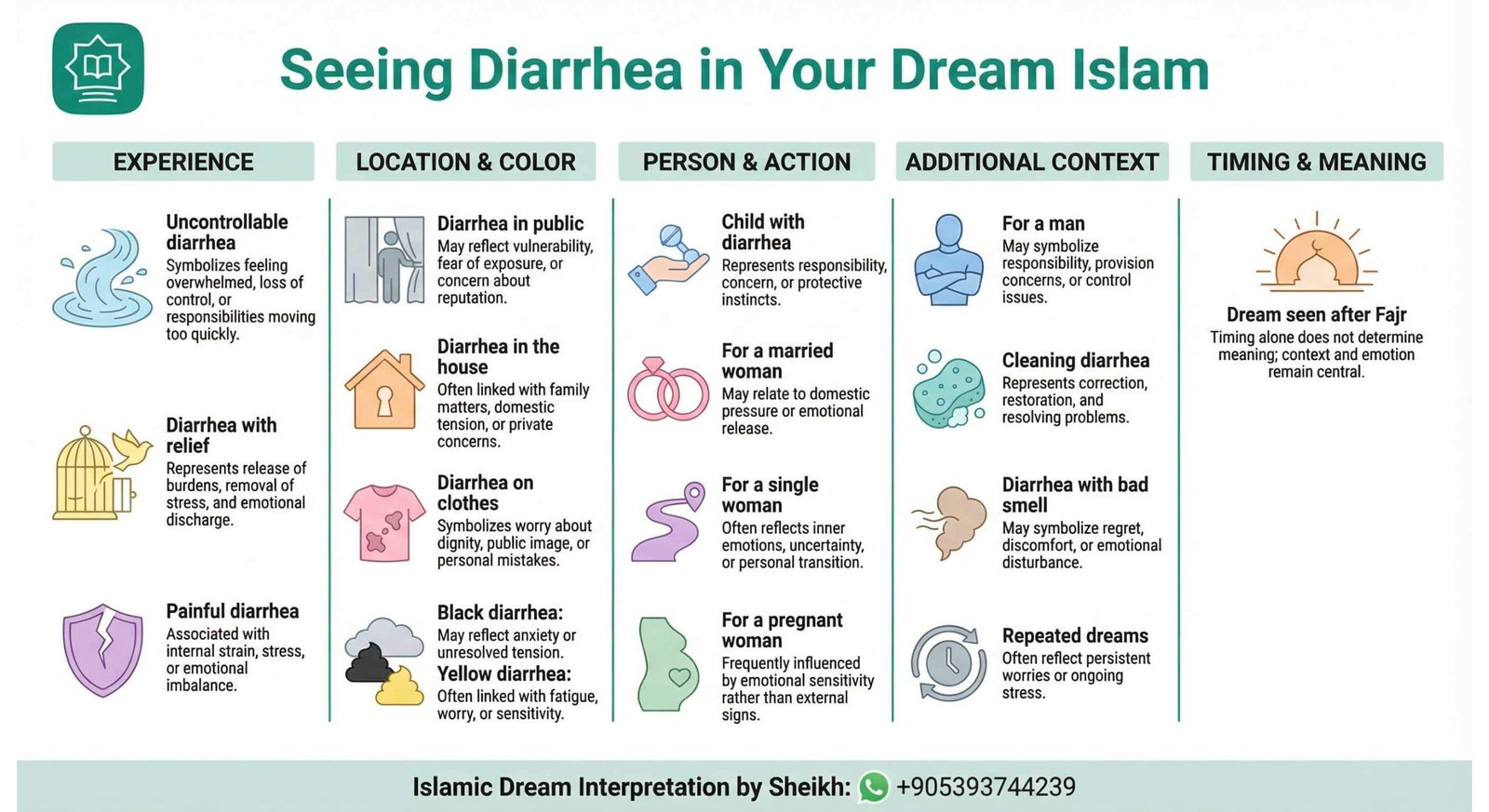
Different Conditions of Seeing Diarrhea in Your Dream Islam
| Different Conditions of Seeing Diarrhea in Your Dream Islam | Islamic Interpretation |
|---|---|
| Uncontrollable diarrhea in dream | In classical Islamic symbolism, loss of control in such a vision often reflects feelings of overwhelm, anxiety, or matters in life moving too quickly. Scholars traditionally linked this imagery to concerns about wealth, emotions, or responsibilities slipping beyond one’s comfort. If the dream is accompanied by distress, it may serve as a reminder to restore balance, act with restraint, and seek stability through remembrance of Allah ﷻ and careful decision-making. |
| Seeing diarrhea with a feeling of relief | When the dream carries ease or physical relief, interpreters often associated it with the discharge of burdens or the removal of worries. The symbolism points toward something heavy leaving the dreamer’s condition, whether emotional tension, stress, or difficulty. Such a dream may subtly indicate forthcoming ease by the permission of Allah ﷻ, encouraging gratitude and continued reliance upon lawful and wise conduct. |
| Diarrhea in a public place dream meaning | Imagery unfolding before others may symbolise vulnerability, fear of exposure, or concerns about reputation. Classical scholars viewed public discomfort in dreams as connected to dignity, privacy, or social unease rather than literal events. The emotional tone is decisive; embarrassment may hint at anxiety or insecurity, while neutrality weakens negative implications. |
| Diarrhea in the house dream interpretation | Occurrences within the home often relate symbolically to private affairs, family matters, or personal concerns. Such a dream may reflect tensions, financial issues, or emotional states tied to domestic life. If the atmosphere is calm, the symbol may indicate release of pressure; if uneasy, it may suggest matters requiring attention or correction. |
| Seeing diarrhea on clothes in dream | Clothing in Islamic dream interpretation frequently represents outward image, dignity, or personal affairs. Disturbance affecting garments may symbolise worry about perception, mistakes, or discomfort linked to one’s conduct. The dream encourages reflection, discretion, and maintaining composure rather than fear. |
| Painful diarrhea in dream meaning | Discomfort or pain within the vision often shifts the symbolism toward stress, internal strain, or imbalance. Classical reasoning associates distressing sensations with anxieties or pressures rather than fixed outcomes. Spiritual steadiness, patience, and self-examination are commonly advised responses. |
| Black diarrhea dream meaning Islam | Dark or unsettling colours in dreams are traditionally read through emotional context rather than literal negativity. Such imagery may reflect anxiety, tension, or unresolved concerns. The dreamer’s feelings remain central, as fear strengthens cautionary tones while calmness softens them. |
| Yellow diarrhea in dream symbolism | Yellow shades are sometimes linked symbolically with fatigue, worry, or sensitivity, though meaning always depends on surrounding details. Classical scholars discouraged rigid conclusions, directing attention instead to personal circumstances and emotional cues within the dream. |
| Seeing a child with diarrhea in dream | Dreams involving children often connect to responsibility, vulnerability, or matters of care. Such imagery may symbolise concern, protective instincts, or subtle anxieties rather than literal indications. The emotional tone guides interpretation. |
| Diarrhea dream meaning for a married woman | Interpretation varies according to personal state and context. For a married woman, such a vision may symbolically relate to domestic pressures, emotional release, or private concerns. Relief within the dream leans toward easing, while distress may hint at tension or worry. |
| Diarrhea dream meaning for a single woman | In classical symbolism, meanings often reflect inner emotions, personal uncertainties, or transitions. The dream’s atmosphere determines whether the symbol points toward release of stress or signals anxiety requiring reflection and composure. |
| Diarrhea dream meaning for a pregnant woman | Pregnancy imagery naturally amplifies themes of sensitivity and concern. Such dreams are frequently influenced by physical and emotional states rather than external signs. Calm visions lean toward neutral interpretations, while distress may echo normal anxieties. |
| Diarrhea dream meaning for a man | For a man, the symbol may reflect pressures, responsibilities, or concerns regarding provision and control. Emotional context and dream details remain decisive, shaping whether the meaning leans toward release or caution. |
| Cleaning diarrhea in dream | Acts of cleaning often represent correction, resolution, or efforts to restore order. Classical scholars frequently viewed cleansing imagery as positive, suggesting removal of difficulty or conscious attempts to rectify matters. |
| Diarrhea with bad smell dream | Strong aversion or unpleasant sensory elements may symbolise discomfort, regret, or emotional disturbance. Interpretation remains symbolic and context-dependent, guiding the dreamer toward reflection and restraint. |
| Repeated diarrhea dreams in Islam | Recurrent visions are traditionally understood as reflections of persistent thoughts, worries, or emotional states. Rather than assuming fixed meanings, Islamic guidance encourages calmness, remembrance of Allah ﷻ, and attention to ongoing concerns in life. |
| Diarrhea dream seen after Fajr | Dreams near dawn are often experienced with greater clarity, yet timing alone does not determine meaning. Emotional tone, context, and personal condition remain central in interpretation. |
Interpretation of the Seeing Diarrhea in Your Dream Islam Dream According to Islamic Scholars
Interpretation of the Seeing Diarrhea in Your Dream Islam Dream According to Islamic Scholars is rooted in the understanding that bodily symbols often point to release, vulnerability, and shifts in a person’s condition. Scholars such as Ibn Sīrīn and al-Nābulsi treated these images as signs rather than literal events. In this light, diarrhea may represent the rapid discharge of worries, the easing of a burden, or the removal of pressure from one’s life. When the dream carries a sense of relief or calm, or when the imagery is free from strong aversion, interpreters frequently associated it with the lifting of hardship, the settling of tensions, or the resolution of a troubling matter by the permission of Allah ﷻ. In certain cases, it may also symbolise wealth departing swiftly yet lawfully, resembling necessary spending or beneficial outflow.
By contrast, the same symbol may serve as a warning when the dream is coloured by discomfort, embarrassment, or distress. Classical scholars often connected uneasy details to imbalance, excess, or anxieties tied to personal affairs. Close attention is therefore given to context, including emotions, location, intensity, and timing. Visions seen after Fajr are sometimes experienced with greater clarity, yet they still require measured reflection. A balanced response avoids both panic and neglect, encouraging remembrance of Allah ﷻ, sincere istighfār, renewed tawbah where needed, acts of ṣadaqah, and reliance upon lawful means alongside steady duʿāʾ for well-being and stability.
The sound approach is to regard such a dream as an invitation to reflection, gratitude, and conscious return to balance before Allah ﷻ.
Interpretation of the Dream of Seeing Diarrhea in Your Dream Islam by Ibn Sirin
Interpretation of the Dream of Seeing Diarrhea in Your Dream Islam by Ibn Sirin is traditionally understood through the symbolic language of release, expenditure, and personal balance. In the interpretive principles attributed to Ibn Sīrīn, bodily discharges often reflect the removal of burdens or the movement of concerns from a person’s life. When the dream is accompanied by ease, relief, or emotional calm, it may point to the lifting of a hardship, the settling of anxiety, or the easing of a difficulty by the permission of Allah ﷻ. A dream that leaves the heart undisturbed is frequently read as a sign of discharge rather than harm, echoing the broader symbolic logic of classical scholarship.
The indication shifts when embarrassment, discomfort, or aversion dominate the vision. Traditional interpretations often linked distressing details with wastefulness, imbalance, or pressures affecting one’s affairs. Emotional tone remains decisive; serenity suggests release, while agitation signals caution. Colour, intensity, and setting may also influence meaning, sometimes reflecting stress, tension, or concerns related to provision. The dreamer’s circumstances matter greatly, as a married woman, a single woman, a pregnant woman, or a man may each experience meanings shaped by responsibility and personal state rather than a single universal rule.
A wise response within the Islamic ethic is steadiness, remembrance of Allah ﷻ, sincere istighfār, mindful tawbah, and reliance upon lawful means while strengthening one’s duʿāʾ and, where appropriate, seeking clarity through istikhārah. The essential takeaway from Ibn Sīrīn’s interpretive spirit is to see the dream as a mirror of balance, inviting gratitude in ease and correction in imbalance.
Interpretation of the Dream of Seeing Diarrhea in Your Dream Islam by Imam Sadiq
Interpretation of the Dream of Seeing Diarrhea in Your Dream Islam by Imam Sadiq is commonly viewed through the themes of release, imbalance, and inner state. Within interpretive principles associated with Imam Jaʿfar al-Ṣādiq, physical disturbances appearing in dreams are often read as symbolic reflections of pressures or tensions leaving a person’s condition. When the dream unfolds without distress and the dreamer senses relief or calm, such imagery may suggest the easing of a burden or the resolution of a matter by the will of Allah ﷻ. The emphasis rests not on the physical form itself but on what it symbolically represents in the dreamer’s life.
When discomfort, embarrassment, or aversion dominate, the symbolism may lean toward caution. Classical Islamic reasoning frequently associates uneasy imagery with imbalance or concerns requiring attention. Emotional atmosphere again becomes central; tranquillity points toward alleviation, while agitation calls for reflection. Details such as severity, colour, location, and personal circumstance refine understanding. Experiences within the house may relate to private affairs, while public scenes may reflect vulnerability or unease. Timing, particularly dreams seen after Fajr, may affect vividness without fixing interpretation.
The balanced response encouraged by the Islamic ethic is composure, remembrance of Allah ﷻ, sincere istighfār, mindful tawbah, acts of ṣadaqah, and reliance upon lawful means alongside steady duʿāʾ and istikhārah. The essential takeaway from Imam al-Ṣādiq’s interpretive spirit is to treat the dream as a signal toward restoring equilibrium, gratitude, and conscious alignment with what is pleasing to Allah ﷻ.
What Does Diarrhea Symbolize in Islamic Dream Interpretation?
What Does Diarrhea Symbolize in Islamic Dream Interpretation? In classical Islamic dream understanding, bodily disturbances are generally read as symbolic expressions rather than literal signs. Within interpretive principles linked to scholars such as Ibn Sīrīn and al-Nābulsi, diarrhea often points to themes of rapid release, discharge of burdens, or swift outflow connected to a person’s condition. When the dream carries relief or emotional neutrality, interpreters frequently associated it with the easing of worries or the lifting of pressures by the permission of Allah ﷻ. The symbolism reflects movement and release, not necessarily harm.
When discomfort, embarrassment, or aversion dominate, the meaning may tilt toward caution. Distressing elements may symbolise imbalance, anxiety, or concerns related to personal affairs. Context shapes interpretation: emotions, severity, colour, and location all carry weight. Occurrences in the house may symbolically relate to private matters, while other settings may reflect vulnerability. Timing, including dreams seen after Fajr, may influence clarity without guaranteeing certainty.
The measured Islamic response is steadiness, remembrance of Allah ﷻ, sincere istighfār, mindful tawbah, balanced conduct, and reliance upon lawful means while strengthening one’s duʿāʾ and seeking guidance through istikhārah. The essential takeaway is that such symbolism invites reflection and balance rather than fear or literal assumption.

Positive vs Negative Meanings of Diarrhea Dreams
Positive vs Negative Meanings of Diarrhea Dreams are understood through the broader symbolic principles of classical Islamic interpretation. When the dream is accompanied by relief or calm, it may point toward the lifting of burdens or the easing of concerns by the permission of Allah ﷻ. The symbolism centres on release and transition rather than the physical imagery itself.
The same vision may carry a warning when discomfort or distress dominate. Uneasy details can symbolically mirror imbalance, anxiety, or matters requiring attention. Emotional tone, intensity, and setting refine understanding, as experiences in the house may relate to private affairs while other scenes may reflect vulnerability. Timing near Fajr may influence clarity without fixing meaning.
A sound Islamic response is composure, remembrance of Allah ﷻ, sincere istighfār, mindful tawbah, acts of ṣadaqah, and reliance upon lawful means while strengthening duʿāʾ and seeking guidance through istikhārah. The essential takeaway is that such dreams call for reflection and balance, not alarm.
Dreams Seen After Fajr and Interpretation Nuances
Dreams Seen After Fajr and Interpretation Nuances hold a recognised place in classical Islamic thought, where scholars observed that visions near dawn often appear clearer and more coherent. Such dreams may reflect inner concerns or structured symbolic impressions. When calmness and reassurance accompany the vision, it may suggest ease or resolution by the permission of Allah ﷻ.
Timing alone, however, never fixes interpretation. Islamic scholarship consistently emphasises context, personal condition, and symbolic patterns. A dream seen after Fajr may still reflect anxiety or tension depending on its details and emotional tone. The classical approach discourages exaggeration, encouraging balanced reflection instead.
The sound response is gratitude for reassuring visions, restraint toward unsettling ones, remembrance of Allah ﷻ, sincere istighfār, mindful tawbah, and reliance upon Allah ﷻ through duʿāʾ and lawful effort while seeking guidance through istikhārah when needed. The essential takeaway is that clarity of timing calls for thoughtful reflection, not certainty.
What Does Diarrhea Symbolize in Islamic Dream Interpretation?
What Does Diarrhea Symbolize in Islamic Dream Interpretation? Within the classical Islamic framework, such imagery is associated with release, vulnerability, and shifts in balance. Scholars often treated bodily functions as metaphors pointing toward the discharge of pressures or the easing of burdens. Relief within the dream frequently reflects symbolic alleviation by the permission of Allah ﷻ.
Conversely, discomfort or aversion may suggest imbalance or anxiety. Emotional tone, intensity, colour, and setting influence understanding. Experiences within the house may relate to private affairs, while timing near Fajr may affect vividness rather than certainty.
The sound response encouraged by Islamic guidance is composure, remembrance of Allah ﷻ, sincere istighfār, mindful tawbah, balanced behaviour, and reliance upon lawful means while increasing duʿāʾ and seeking clarity through istikhārah. The essential takeaway is that such dreams invite reflection on balance and restraint rather than alarm.
Common Misconceptions About Diarrhea Dreams in Islam
Common Misconceptions About Diarrhea Dreams in Islam often stem from viewing symbols as rigid predictions. Classical Islamic scholars did not treat unsettling imagery as automatically negative nor reassuring imagery as inherently positive. Bodily symbols are read through context and emotional tone, where relief may reflect discharge of worries by the permission of Allah ﷻ.
Another frequent misunderstanding is neglecting surrounding details. Dreams are shaped by personal state, emotions, and circumstance. Location, intensity, and timing, including visions seen after Fajr, influence clarity but not certainty. Over-interpretation contradicts the balanced Islamic approach.
The sound response is composure, remembrance of Allah ﷻ, avoidance of fatalistic conclusions, sincere istighfār, mindful tawbah, acts of charity, and reliance upon lawful means alongside steady duʿāʾ and istikhārah. The essential takeaway is that dreams require measured reflection and spiritual steadiness rather than fear or literal assumption.