

Dreams that involve impurity often leave a person unsettled upon waking, particularly when the imagery feels vivid or carries a sense of embarrassment. The Islamic dream interpretation of Poop on Clothes Dream Meaning Islam is therefore approached with seriousness and care, not mockery or superstition, but reflection guided by the Qur’an, the Sunnah, and the understanding of classical scholars. Such visions can trouble the heart because clothing, within the symbolic language recognised by early authorities, frequently relates to one’s outward state, dignity, and personal circumstances.
At Best Istikhara, meanings are never forced into rigid formulas. The significance of a dream may shift according to context: the dreamer’s condition, the emotions experienced, whether the impurity was noticed or ignored, removed or left as it was, and even where the event unfolded. Subtle elements such as timing, including dreams seen after Fajr, may also influence how a vision is weighed. Interpretations can vary according to personal realities, whether the dreamer is a man or a married, single, or pregnant woman, as well as the surrounding symbols and actions within the dream itself. This article provides authentic, case-specific guidance, moving from foundational meanings to recognisable scenarios and practical steps for understanding what such imagery may signify. This dream might have a serious meaning. If you want your dream interpreted personally by our Sheikh, send us a message on WhatsApp: +90 539 374 42 39.
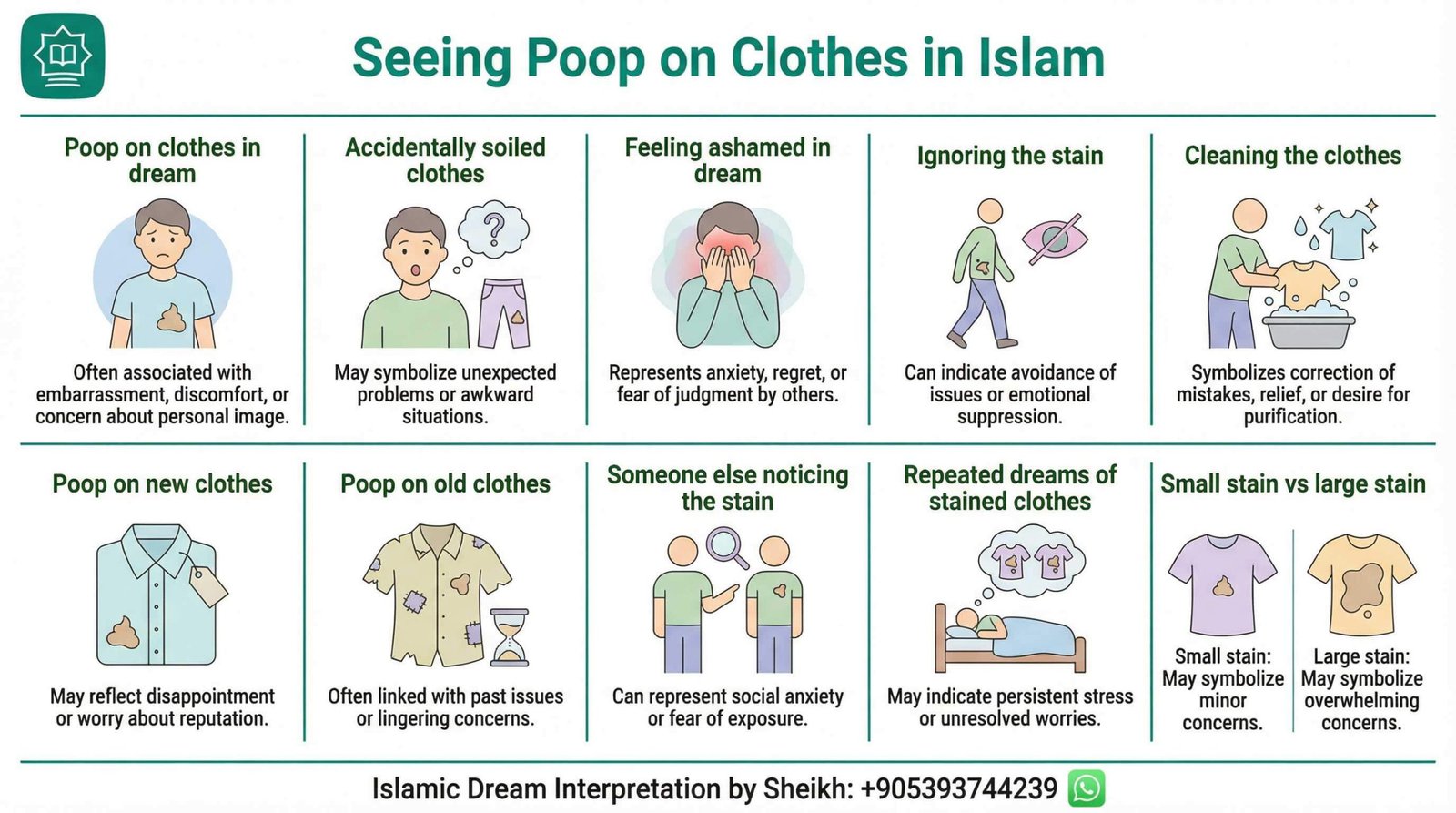
Different Conditions of Poop on Clothes Dream Meaning Islam
| Different Conditions of Poop on Clothes Dream Meaning Islam | Islamic Interpretation |
|---|---|
| Poop on your clothes in dream Islam | In the symbolic language of classical scholars, clothing reflects one’s outward dignity and visible affairs, while impurity may point to burdens, financial matters, or issues a person wishes to conceal. When the dream carries no shame or distress, it can indicate release from pressure or the settling of a difficulty by the permission of Allah ﷻ. If accompanied by embarrassment or disgust, it may signal concern over reputation or conduct, calling for reflection, istighfār, and ethical correction. |
| Cleaning poop from clothes dream meaning Islam | Washing or removing impurity traditionally symbolizes purification, rectification, and the clearing of worries. Such a vision may indicate repentance, the correction of a mistake, or relief from a troubling matter. The calmer the emotions within the dream, the stronger the association with positive change and renewal of inner or outward states. |
| Someone pooped on my clothes dream Islam | When another person is the source of impurity, scholars often associate the symbol with external influences, social tensions, or discomfort arising from others. The meaning may relate to perceived harm, embarrassment, or unwanted involvement. A measured response involves patience, guarding one’s reactions, and maintaining upright dealings while seeking protection through duʿāʾ. |
| Child pooping on clothes dream Islam | A child in dreams may represent innocence, responsibility, or emerging matters. Impurity from a child can symbolically indicate minor worries, unexpected responsibilities, or issues that are temporary in nature. Absence of distress often softens the interpretation, suggesting manageable concerns or passing inconveniences. |
| Poop stains visible on clothes dream Islam | Visibility in dream symbolism frequently connects to matters becoming known or openly perceived. Clear stains may reflect anxiety about exposure, social judgment, or personal concerns tied to reputation. Emotional tone remains decisive; calmness may lessen the warning, while shame intensifies the call for self-assessment. |
| Poop stains hidden on clothes dream Islam | Concealed impurity may symbolize private concerns, undisclosed worries, or matters kept from others. This imagery can indicate inner unease or issues handled quietly. Scholars emphasize restraint from suspicion and encourage reflection, prayer, and ethical mindfulness rather than fear. |
| White clothes stained with poop dream Islam | White garments commonly symbolize purity, clarity, or outward honour. Staining may reflect perceived blemishes in reputation, conduct, or self-image. The dream may serve as a reminder toward caution, repentance, and safeguarding dignity, particularly if the dream evokes discomfort. |
| Black clothes stained with poop dream Islam | Dark garments often relate to worldly affairs, authority, or hidden matters. Impurity upon them may signify burdens, worries, or concerns not easily perceived by others. The interpretation shifts with emotions and surrounding symbols, guiding the dreamer toward patience and measured reflection. |
| Poop on clothes in public dream Islam | Public settings symbolize social presence and external perception. Such imagery may mirror fears of embarrassment, exposure, or reputational anxiety. Scholars advise calmness, avoidance of over-interpretation, and strengthening of character, speech, and conduct through remembrance of Allah ﷻ. |
| Poop on clothes at home dream Islam | The house often represents personal life, security, and family affairs. Impurity in this context may relate to domestic concerns or private matters. Absence of distress may soften the meaning, while discomfort encourages thoughtful reflection and maintenance of harmony. |
| Repeated poop on clothes dreams Islam | Repetition may signal persistent thoughts, unresolved tension, or recurring anxieties rather than fixed prediction. Scholars historically urged balance, avoiding obsession while considering possible lessons. Steadiness through ṣalāh, istighfār, and lawful practical effort remains the sound path. |
| After Fajr poop on clothes dream Islam | Dreams noticed after Fajr are traditionally approached with attentiveness due to mental clarity, yet not treated as absolute certainty. Emotional tone and context govern interpretation. A calm vision may reflect internal processing, while distress invites increased remembrance, duʿāʾ, and composure. |
| Feeling ashamed in poop dream Islam | Emotions within dreams are key interpretive elements. Shame may symbolize sensitivity about conduct, social perception, or personal concerns. Scholars associated such feelings with inward awareness, encouraging dignified self-correction and ethical mindfulness. |
| Indifference to poop on clothes dream Islam | Lack of distress may symbolically reflect normalization of a concern, release of tension, or diminished anxiety. Interpretations remain context-dependent, but calm emotional states often soften cautionary readings. Reflection without fear aligns with classical guidance. |
| Washing dirty clothes dream Islam | Washing garments generally symbolizes purification, repentance, and renewal. This imagery often indicates efforts toward correction, spiritual cleansing, or relief from burdens. The symbolism encourages continuity in upright conduct and trust in Allah ﷻ. |
| Poop on new clothes dream Islam | New garments may represent fresh beginnings, reputation, or emerging circumstances. Impurity upon them can reflect anxiety about upcoming matters or perceived imperfections. Emotional tone and dream context determine whether the symbolism leans toward caution or minor concern. |
| Poop on old clothes dream Islam | Worn garments may symbolize past affairs or familiar c |
Interpretation of the Poop on Clothes Dream Meaning Islam Dream According to Islamic Scholars
Interpretation of the Poop on Clothes Dream Meaning Islam Dream According to Islamic Scholars calls for careful symbolic reading, since classical authorities did not treat images of impurity as mere literal filth. Rather, such symbols were often linked to wealth, reputation, burdens, or concealed matters. Within the interpretive principles associated with scholars like Ibn Sīrīn and al-Nābulsi, clothing commonly represents a person’s outward state, dignity, and social presence, while bodily waste may allude to relief, release, financial concerns, or matters a person prefers to keep hidden. When the dream appears without distress and the soiling seems accidental, limited, or followed by ease, it may suggest the lifting of a worry, discharge of an obligation, or the easing of inner pressure by the permission of Allah ﷻ. In certain contexts, the symbolism may even hint at provision or the conclusion of a matter that had weighed heavily upon the dreamer.
By contrast, when the dream is marked by shame, anxiety, strong disgust, or fear of exposure, scholars traditionally inclined toward a cautionary understanding. Such imagery may reflect concerns about one’s reputation, questionable earnings, or unresolved private affairs. Nuances carry interpretive weight: whether the garments were black or white, new or worn, cleaned or left soiled, and whether the setting was within the house or a public space. Emotional tone is particularly significant, as is timing, since dreams seen after Fajr have historically been regarded with greater attentiveness. The sound response in unsettling cases is not panic, but rectification through tawbah, increased istighfār, charity, restraint in speech, and restoration of strained relationships, alongside lawful practical measures and sincere duʿāʾ seeking clarity and protection.
The essential takeaway is to view such a dream as an invitation to reflection, purify one’s conduct and intentions, and seek nearness to Allah ﷻ through remembrance and upright living.
Interpretation of the Dream of Poop on Clothes Dream Meaning Islam by Ibn Sirin
Interpretation of the Dream of Poop on Clothes Dream Meaning Islam by Ibn Sirin is understood through symbolic association rather than literal imagery, as early scholars frequently regarded clothing as representing outward dignity, livelihood, and social standing. Within this framework, impurity on garments may indicate matters connected to wealth, conduct, or hidden concerns that may become visible. When the dream carries a sense of calm, relief, or indifference, and no strong disgust or embarrassment is present, the symbolism may lean toward release from burdens, discharge of obligations, or the easing of a difficulty by the will of Allah ﷻ. In some instances, minor soiling followed by cleaning may even point toward provision or the resolution of a matter that had caused strain.
When discomfort, shame, or anxiety dominates the vision, Ibn Sirin’s interpretive principles suggest a more cautious reading. Such elements may reflect unease about reputation, questionable dealings, or private matters that trouble the conscience. Context remains decisive: white garments versus dark ones, new clothing versus worn, and whether the impurity was removed or ignored. A dream unfolding in the house may symbolically relate to domestic or financial concerns, while public exposure may allude to social sensitivity. Emotional tone is again central, and dreams perceived after Fajr have traditionally been treated with greater attentiveness. The proper response is not fear, but dignified correction through sincere tawbah, abundant istighfār, charity, and mindfulness in speech and conduct, alongside lawful effort and humble duʿāʾ seeking steadiness and protection.
The essential takeaway is that such a dream invites thoughtful self-assessment, purification of one’s dealings, and renewed reliance upon Allah ﷻ through remembrance and upright conduct.
Interpretation of the Dream of Poop on Clothes Dream Meaning Islam by Imam Sadiq
Interpretation of the Dream of Poop on Clothes Dream Meaning Islam by Imam Sadiq is viewed through layered symbolism, where garments reflect a person’s visible condition, honour, and worldly affairs, while impurity may signify matters tied to wealth, relief, accountability, or concealed concerns. In the interpretive spirit attributed to Imam Sadiq, the image itself is never isolated from its context. When the dream unfolds without distress, embarrassment, or strong disgust, it may symbolise release from a burden, settlement of an obligation, or the quiet resolution of a hidden matter by the permission of Allah ﷻ. At times, limited impurity followed by ease may even suggest material benefit or the lifting of an inner pressure that had remained unspoken.
When the dream evokes shame, anxiety, or fear, the reading shifts toward caution. The symbolism may then mirror worries regarding reputation, personal conduct, or strained relationships. Details carry interpretive value: whether the clothes were white or black, new or worn, cleaned or left as they were. Occurrence within the house may relate to personal or financial affairs, while public settings may symbolise social sensitivity. Emotional tone remains decisive, as serenity, indifference, or discomfort each alter the interpretive direction. Dreams perceived after Fajr have historically been approached with greater attentiveness. The response emphasised by scholars is measured rectification through tawbah, increased istighfār, sincere duʿāʾ, charity, and ethical mindfulness, combined with lawful practical effort and restraint.
The essential takeaway is that such a vision calls the dreamer toward purification of conduct and intention, seeking steadiness through remembrance of Allah ﷻ.
What Does Poop on Clothes Symbolize in Dreams?
What Does Poop on Clothes Symbolize in Dreams? Within the symbolic language recognised by classical Muslim scholars, garments frequently represent outward dignity, livelihood, and the manner in which a person appears before others, while impurity may allude to release, burdens, wealth, or concealed matters. Such imagery is not read crudely, but weighed through context. When the dream carries no anxiety, shame, or distress, and the soiling appears limited or incidental, it may hint at relief from pressure, settlement of a difficulty, or benefit granted by Allah ﷻ. Minor impurity accompanied by calmness may symbolically reflect the discharge of worries or obligations.
When discomfort, embarrassment, or fear dominates the vision, the symbolism tends toward caution. The dream may then mirror concerns regarding reputation, conduct, or unresolved private matters. Nuances influence interpretation: white clothes versus black, new garments versus worn, cleaning versus neglect. Occurrence in the house may relate to domestic affairs, while public exposure may symbolise social sensitivity. Emotional tone remains central. The sound response is measured self-correction through tawbah, abundant istighfār, sincere duʿāʾ, charity, and ethical restraint, alongside lawful practical effort.
The essential takeaway is that such symbolism calls for dignified reflection, purification of one’s dealings, and renewed reliance upon Allah ﷻ.

Positive vs Negative Interpretations of Such Dreams
Positive vs Negative Interpretations of Such Dreams are discerned by examining emotional tone, surrounding details, and symbolic associations rather than the surface image alone. In the classical methodology, impurity on clothing does not automatically signal harm. When the dream carries no shame or agitation, and the soiling appears minor or followed by ease, the vision may symbolically point toward relief, release from anxiety, or benefit granted by Allah ﷻ. A sense of calmness or indifference within the dream can itself be meaningful. Nuances such as colour, condition of clothing, and reaction of the dreamer influence understanding.
When the dream is marked by embarrassment, foul odour, or distress, scholars traditionally inclined toward caution. Such signs may reflect concerns about reputation, conduct, or unresolved tensions. Contextual cues carry weight, as do emotional reactions. Dreams perceived after Fajr have historically been approached with attentiveness. The appropriate response is measured rectification through tawbah, istighfār, sincere duʿāʾ, charity, and lawful practical means while maintaining trust in Allah ﷻ.
The essential takeaway is to interpret such visions through context and respond with reflection rather than fear.
Timing, Frequency, and After Fajr Dreams
Timing, Frequency, and After Fajr Dreams hold recognised significance in the classical understanding of dreams, where scholars observed that not all visions carry equal symbolic weight. Dreams seen closer to the early morning hours, particularly after Fajr, were often treated with greater attentiveness due to the mind’s relative clarity. Such timing does not guarantee certainty, yet it may deepen reflection. Repetition can also be meaningful, sometimes indicating persistent concerns or unresolved thoughts.
Frequency and emotional tone remain decisive. A dream that recurs with anxiety may signal an area requiring reflection rather than alarm. Details such as colour, place, and reaction influence understanding. The appropriate response is dignified steadiness through remembrance of Allah ﷻ, sincere istighfār, measured tawbah, lawful practical effort, and duʿāʾ, avoiding both obsession and neglect.
The essential takeaway is that timing and recurrence invite composure and thoughtful reflection.
What to Do After Seeing Poop on Clothes Dream Meaning Islam in Dream?
What to Do After Seeing Poop on Clothes Dream Meaning Islam in Dream? The first response is inward steadiness rather than alarm, since the classical tradition never treated dream imagery as automatic judgment. When the experience was neutral or calm, it may simply reflect mental residue or the easing of a concern by the permission of Allah ﷻ. Gratitude and composure remain appropriate without excessive preoccupation.
If discomfort or unease followed the dream, the sound course is dignified spiritual recalibration. This includes sincere istighfār, measured tawbah, quiet charity, ethical mindfulness, and lawful practical effort. Contextual details may be reflected upon without fixation. Supplication, remembrance of Allah ﷻ, and istikhārah nurture clarity while preserving balance.
The essential takeaway is to meet such a vision with calm remembrance and trust in Allah ﷻ.
Misconceptions and Errors in Dream Interpretation
Misconceptions and Errors in Dream Interpretation often arise when dreams are treated as rigid predictions or stripped of their symbolic nature. Classical scholars emphasised that meanings shift with context, emotional tone, and personal circumstances. Ignoring these factors can lead to unnecessary distress or false certainty.
Another frequent error lies in exaggeration or reliance on ungrounded explanations. Timing, though meaningful, does not transform every dream into an absolute sign. The sound response is balance: composure, istighfār, tawbah where appropriate, charity, ethical restraint, and sincere duʿāʾ, avoiding both obsession and dismissal.
The essential takeaway is that dreams require thoughtful restraint and remembrance of Allah ﷻ rather than impulsive judgment.