
Is Celebrating Christmas Haram for Muslims?
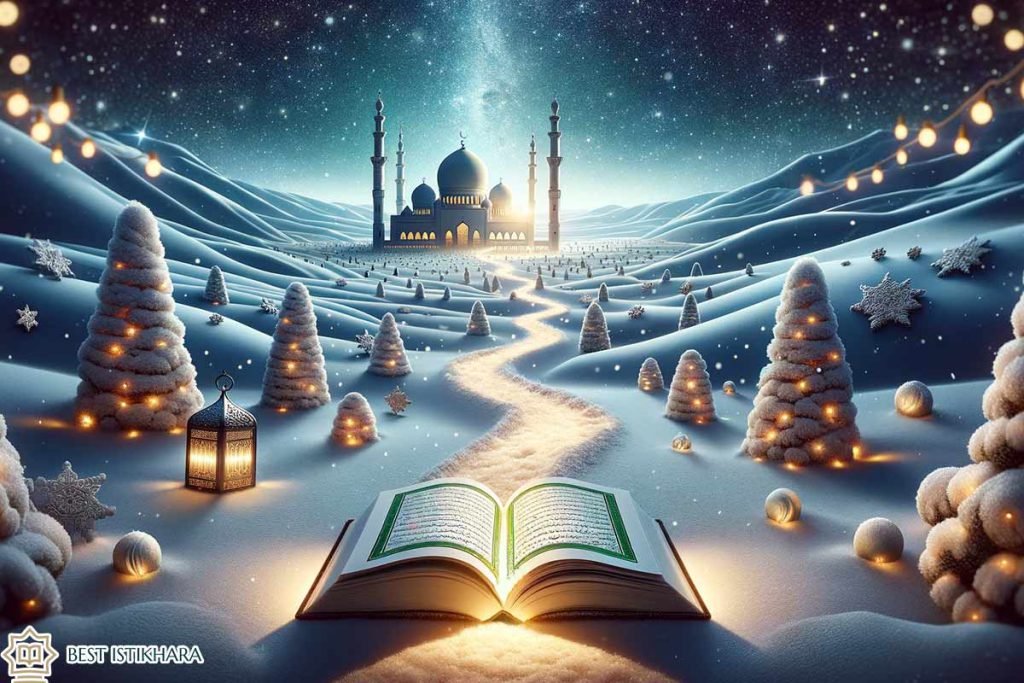
The topic of celebrating Christmas holds a unique place within the Islamic discourse, intertwining theological principles with cultural nuances. Christmas, primarily a Christian holiday commemorating the birth of Jesus Christ, intersects with Islamic teachings in profound ways. Islam recognizes Jesus, or Isa in Arabic, as one of the prophets but diverges significantly in the narrative and significance attributed to his birth. This divergence prompts a nuanced exploration of whether participating in Christmas celebrations aligns with or contradicts Islamic principles. Addressing this requires an understanding of the concepts of halal (permissible) and haram (forbidden) within Islam, as well as the broader Islamic viewpoints on engaging with non-Muslim religious festivities. The discussion is not just theological but also cultural, as Muslims around the world navigate their identities in diverse societies. This introduction aims to unpack these complexities, providing a comprehensive backdrop for understanding the implications of celebrating Christmas from an Islamic perspective. Click to get more information about halal vs haram topics discussed in today’s world.
The Islamic Stance on Celebrating Non-Muslim Festivals
Islamic teachings provide a comprehensive framework for guiding followers’ interactions with non-Muslim practices and celebrations. The core principle underpinning this stance is the preservation of Islamic identity and the avoidance of actions that may compromise one’s faith. This principle is derived from various sources within Islamic jurisprudence, including the Quran and Hadith, which emphasize the importance of maintaining distinct Muslim practices and caution against imitating non-Muslims in religious rituals and celebrations.
Islamic Views on Non-Muslim Festivals
The general Islamic viewpoint discourages participation in non-Muslim religious festivals when such participation involves religious rituals or symbols that contradict Islamic monotheism. However, scholars also highlight the importance of community relations and mutual respect. As such, there’s a nuanced understanding that while direct participation in religious aspects of non-Muslim festivals is generally discouraged, actions that foster goodwill and social cohesion without compromising Islamic principles are viewed in a more flexible light. This balance aims to maintain religious integrity while navigating the complexities of living in a pluralistic society. Therefore, the discussion around celebrating Christmas becomes an opportunity to explore these nuances, focusing on the distinction between cultural participation and religious endorsement.
Christmas and the Concept of Shirk in Islam
Within Islam, Shirk—associating partners with Allah—is considered the most severe sin a believer can commit. It directly contradicts Tawhid, the principle of monotheism, and the oneness of Allah, which is the foundational aspect of the Islamic faith. This concept is crucial when examining the permissibility of celebrating Christmas, a holiday with deeply rooted Christian theological implications, including celebrating the birth of Jesus Christ as the Son of God, which diverges from Islamic teachings about Jesus (Isa) as a prophet.
Christmas & Shirk in Islam: A Brief
Engaging in Christmas celebrations, especially those aspects emphasizing the divinity of Jesus may be seen as conflicting with the Islamic tenet of Tawhid. For Muslims, any practice or celebration that implies acknowledgment of divinity outside of Allah falls into the category of Shirk. Consequently, while cultural exchanges and participation in non-religious aspects of festivities might be permissible under certain interpretations, the inherent religious symbolism of Christmas necessitates a cautious approach. Muslims are encouraged to navigate such cultural intersections with a clear understanding of their faith’s teachings on monotheism, ensuring their practices remain aligned with the core principles of Islam.
Conclusion
Navigating the celebration of Christmas as a Muslim involves balancing maintaining Islamic principles and engaging with diverse cultural practices. Understanding the concepts of halal, haram, and the avoidance of Shirk is essential for Muslims to make informed decisions about their participation in non-Muslim festivities. While Islam emphasizes respect for all prophets, including Isa (Jesus), it also underscores the importance of adhering to monotheism. The discussion around Christmas highlights the broader Islamic stance on participating in non-Muslim festivals, advocating for a respectful and informed approach that fosters mutual understanding and interfaith harmony.
FAQ
- Can Muslims wish “Merry Christmas” to their Christian friends?
- Wishing “Merry Christmas” is a topic of debate among Islamic scholars. Some argue that extending such greetings is a gesture of goodwill and does not compromise one’s Islamic faith. In contrast, others suggest it could imply an endorsement of theological views contrary to Islam. The consensus leans towards promoting mutual respect and understanding, advising Muslims to convey wishes in a manner that respects both Islamic beliefs and the spirit of friendship.
- Is participating in Christmas parties acceptable for Muslims?
- Participation in Christmas parties is generally evaluated based on the nature of the festivities. If the celebration has religious rituals or symbols directly linked to Christian beliefs, Muslims are advised to abstain. However, attending cultural or social gatherings without engaging in religious ceremonies is often permissible, emphasizing the importance of maintaining professional and social relationships.
- Can Muslims decorate their homes for Christmas?
- Decorating homes for Christmas is often discouraged in Islamic teachings, as it may be seen as celebrating a religious festival that does not align with Islamic principles. However, there is a distinction made between decorations that are explicitly religious and those that are purely cultural or festive. Muslims are encouraged to be mindful of the implications of their choices in light of their faith.
- How can Muslims explain their stance on Christmas to their children?
- Explaining the Islamic stance on Christmas to children involves teaching them about the beauty and diversity of religious practices while emphasizing the unique aspects of their faith. Parents can explain the significance of respecting other religions’ celebrations without partaking in their religious elements, fostering a sense of respect and understanding from a young age.
- Is it permissible for Muslims to give or receive Christmas gifts?
- Exchanging gifts is a cherished practice in Islam, and it is encouraged to foster goodwill and kinship. The intention behind the gift-giving is key when it comes to Christmas gifts. Muslims can participate in the exchange of gifts if the act is meant to strengthen bonds and is not tied to religious symbolism that contradicts Islamic beliefs.
- How should Muslims approach office Christmas celebrations?
- Muslims are advised to approach office Christmas celebrations with professionalism and respect for diversity. Participating in non-religious aspects of such celebrations can be acceptable, emphasizing the value of inclusivity and mutual respect in the workplace. Muslims must clearly and respectfully communicate their boundaries, ensuring their participation aligns with their personal beliefs and professional environment.