In the quest for beauty and self-expression, various cosmetic procedures have gained popularity among individuals worldwide, including Muslims. One such procedure is microblading, a semi-permanent technique for enhancing the appearance of eyebrows. However, for Muslims, the permissibility of cosmetic procedures is not solely a matter of personal choice but also of religious compliance. This article delves into the Islamic perspective on microblading, examining whether it is considered halal (permissible) or haram (forbidden) under Islamic law. Click to get more information about halal vs haram topics discussed in today’s world.
Understanding Microblading
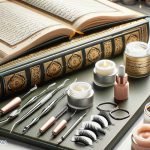
Microblading is a cosmetic procedure that involves using a fine blade to deposit pigment under the skin, mimicking the appearance of natural eyebrow hairs. It is often sought by those wishing to enhance or reshape their eyebrows. Despite its benefits, the procedure raises questions regarding its permissibility in Islam, particularly in relation to the principles of altering Allah’s creation and the rules surrounding ablution (wudu) and prayer.
Islamic Perspective on Alteration of Physical Features
Islam places significant emphasis on accepting Allah’s creation, as altering one’s physical appearance without a valid medical reason is generally discouraged. The Prophet Muhammad (peace be upon him) is reported to have said: “Allah has cursed those women who practice tattooing and those who get themselves tattooed, and those who remove their face hairs, and those who create a space between their teeth artificially to look beautiful, and such women as change the features created by Allah. Why then should I not curse those whom the Prophet (peace be upon him) has cursed?” (Sahih Bukhari and Muslim).
However, Islamic scholars differentiate between permanent changes that alter creation without necessity and temporary or corrective measures taken for valid reasons, such as medical treatment or correcting a deformity.
Microblading and Ablution (Wudu)
A crucial aspect of Islamic prayer is the performance of ablution, which involves washing certain parts of the body. A key concern with microblading is whether the pigment inserted into the skin prevents water from reaching the skin, thereby invalidating wudu. Scholars argue that if the pigment creates a barrier that prevents water from touching the skin, it could interfere with the validity of ablution and, consequently, prayer.
Halal or Haram? The Islamic ruling on microblading can vary among scholars, largely depending on two factors: the intention behind the procedure and its impact on religious practices like ablution.
Intention: If microblading is done to correct a deformity or for medical reasons, some scholars might consider it permissible, aligning with the Islamic principle of alleviating harm or difficulty.
Impact on Ablution: If the procedure does not create a barrier to water reaching the skin, or if the pigment is applied in a manner that does not interfere with the cleanliness required for prayer, it could be deemed permissible by some scholars.
Conclusion
The permissibility of microblading in Islam does not have a one-size-fits-all answer and can depend on various factors, including the intention behind undergoing the procedure and its effect on religious duties like ablution. Muslims considering microblading should consult with knowledgeable Islamic scholars to ensure their actions align with their faith. It is crucial to approach beauty enhancements with a clear understanding of Islamic principles, prioritizing religious obligations and the acceptance of Allah’s creation.