
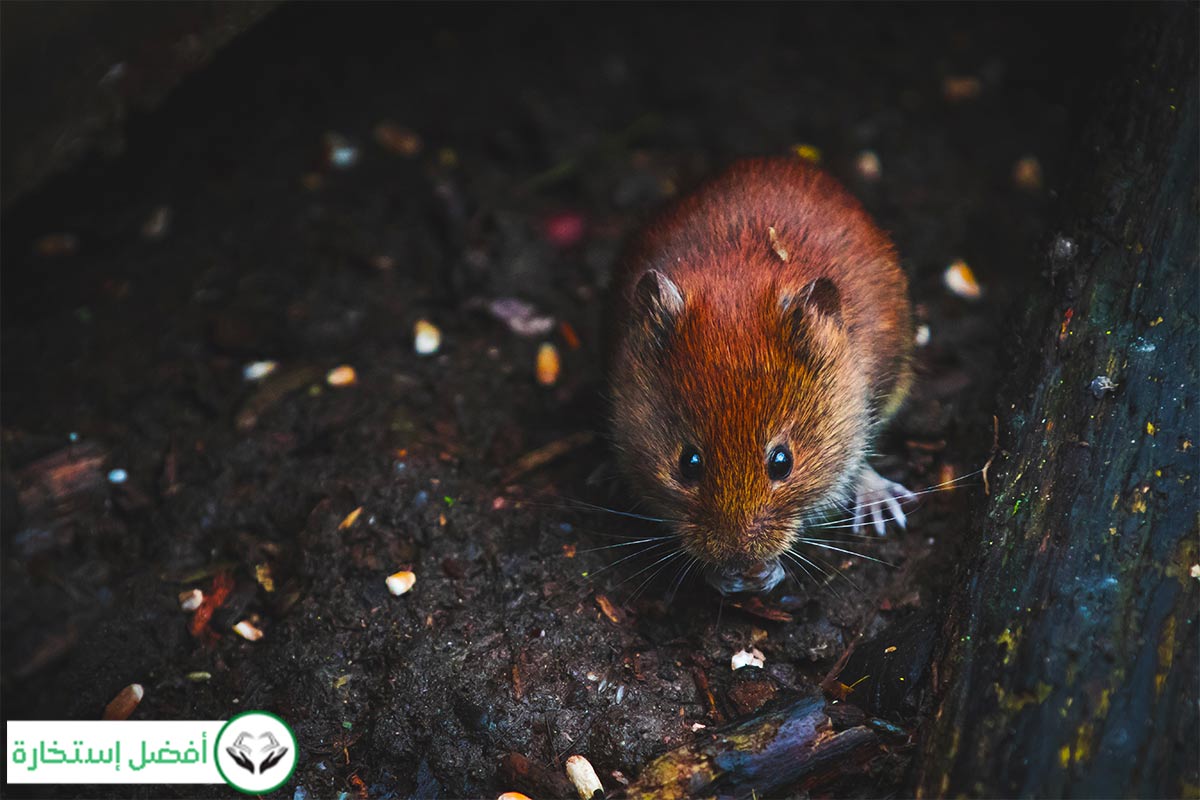
Seeing a mouse in a dream does not have one fixed meaning established by the Qur’an or authentic Sunnah. In Islamic dream interpretation, the meaning can depend on the dream’s details, the dreamer’s circumstances, and whether the experience was a pleasant vision, a disturbing dream, or simply a reflection of waking concerns. Classical dream-interpretation literature does contain specific associations for mice, but these should be treated as traditional interpretations rather than certain predictions about what Allah intends for an individual.
Classical sources commonly associate the mouse with themes such as a troublesome person, theft, household concerns, or something hidden and disruptive. Some traditional interpretations are more positive in particular circumstances, especially when mice appear in a prosperous household or in large numbers. The most useful way to read such a dream is therefore to consider what the mouse was doing, where it appeared, how you responded, and how you felt during the dream.
What Does Seeing a Mouse in a Dream Mean in Islam?
There is no specific authentic Qur’anic verse or Prophetic hadith that says a mouse always represents one particular thing in a dream. The Prophet Muhammad ﷺ did, however, teach that dreams are not all of the same kind. A good vision is from Allah, while a distressing dream is from Satan; a person who sees something frightening or hateful in a dream is instructed to seek refuge in Allah and not allow the dream to cause harm or fear. This guidance is recorded in Sahih al-Bukhari and Sahih Muslim.
For that reason, a mouse appearing in a dream should not automatically be treated as a divine warning, a prediction of financial loss, or evidence that a particular person is dishonest. Traditional interpretations can offer possibilities, but they cannot establish certainty.
In classical Islamic dream literature, the mouse is often associated with a person or circumstance that is troublesome, concealed, intrusive, or potentially harmful. Some texts also connect mice with household members, servants, thieves, livelihood, and changes in the condition of a home. These associations come from the later tradition of dream interpretation rather than from an explicit statement in the Qur’an or Sunnah.

How Classical Islamic Dream Interpretation Describes a Mouse
Classical dream dictionaries contain more specific interpretations of the mouse. A work traditionally attributed to Ibn Sirin associates the mouse with possibilities including a corrupt or dishonest woman, a thief, household dependants, or the loss of blessing when the mouse leaves the home. Other classical material, including the work of al-Nabulsi, similarly gives the mouse several possible meanings rather than a single universal definition.
These older interpretations should be read in their historical context. They reflect a symbolic tradition in which animals were connected with their perceived behaviour, social circumstances, and cultural associations. They should not be turned into judgments about real people simply because someone dreams about a mouse.
For example, a traditional interpretation of a mouse leaving the house may associate the event with a decrease in blessing or livelihood. A mouse playing inside the house can have a more favourable traditional interpretation because mice were associated with places where food and provisions were available. These are examples of classical symbolism, not guarantees that prosperity or hardship will follow.
Dreaming of a Mouse in the House
The location of the mouse can be particularly important in traditional interpretation. Because the home represents one’s family, possessions, privacy, and daily life, a mouse inside the house may draw attention to something affecting those areas.
- A mouse entering the house: In classical interpretations, this can be associated with an unwanted person, intrusion, or a concern affecting the household.
- A mouse leaving the house: Some classical texts associate this with a reduction in blessing or livelihood.
- A mouse playing in the house: Traditional interpretations can regard this more positively and associate it with abundance or prosperity.
- Many mice in the house: Classical sources give several interpretations, including household concerns and, in some circumstances, increased provision.
- A mouse hiding in the house: This may naturally draw attention to something concealed or unresolved, although this is a contextual reading rather than a fixed Islamic rule.
If the dream made you anxious about your family or home, it is also worth considering whether the dream reflects an existing concern in waking life. Islamic guidance does not require a person to assume that every frightening image predicts an external event.
What Does Catching a Mouse in a Dream Mean?
Traditional dream literature sometimes gives the act of catching a mouse a more specific meaning than simply seeing one. In classical interpretations, capturing a mouse can be associated with gaining control over a troublesome situation or dealing with a person represented by the mouse.
However, the emotional context still matters. If you calmly catch the mouse, the dream may be understood as an image of control, resolution, or overcoming something that has been disturbing you. If you struggle unsuccessfully while the mouse repeatedly escapes, the dream may instead reflect frustration or an unresolved problem.
It is better to describe these as possible symbolic readings than to say that catching a mouse guarantees success, financial gain, or victory over an enemy.
Dreaming of Killing a Mouse
Some classical interpretations regard killing a mouse as a favourable sign, associating it with overcoming or getting rid of a troublesome person or problem. In that traditional framework, the important feature is not simply the death of the animal but the dreamer’s success in dealing with something represented by it.
Even so, a dream about killing a mouse should not be used as proof that a particular person in waking life is an enemy. If someone comes to mind after such a dream, it is safer to judge that relationship by real evidence and behaviour rather than by the dream alone.
Dreaming of a Dead Mouse
A dead mouse may naturally symbolize the end of something that was previously disturbing the dreamer. In a traditional reading, it can therefore be understood as the removal of a nuisance, obstacle, or source of concern.
But the dreamer’s reaction is important. Feeling relieved may make the image fit a sense of resolution, whereas feeling frightened or disgusted may indicate that the dream remains emotionally troubling. A disturbing dream should not be treated as a prediction simply because its imagery is unpleasant.
Dreaming of a White Mouse
Some modern interpretations give special significance to a white mouse, often connecting white with purity or a more favourable outcome. However, there is no specific authentic Islamic text establishing that a white mouse has a universally positive meaning.
Classical dream literature does discuss white and black mice in particular contexts, including an interpretation in which their alternation represents days and nights. That symbolism belongs to the classical interpretive tradition and should not be presented as a Prophetic teaching.
If the white mouse appeared calm, harmless, or friendly, the dreamer’s positive emotional response may be relevant. If it appeared threatening despite its colour, the traditional association with whiteness should not override the actual context of the dream.
Dreaming of a Mouse Biting or Attacking You
A mouse that bites or attacks can make the dream feel substantially different from one that simply appears in the distance. Traditional symbolism may lead the dreamer to consider themes of harm, intrusion, hostility, or a relatively small problem that has become difficult to ignore.
It would be too strong, however, to say that a mouse bite predicts illness, betrayal, or financial loss. The source material does not establish such a fixed rule. If the dream occurred during a period of fear or conflict, the attack may also reflect the emotional pressure the dreamer is already experiencing.
For a frightening dream, the most important Islamic response is not to search endlessly for a prediction. The Prophet ﷺ taught that when a person sees a dream they dislike, they should seek refuge with Allah from its evil and from Satan; such a dream will not harm them. The guidance is recorded in Sahih Muslim.
Dreaming of a Mouse Running in Circles
A mouse repeatedly running in circles is not given a universally established Islamic interpretation. As a contextual symbol, however, the repetitive movement may resonate with feelings of being stuck, repeatedly dealing with the same minor problem, or being unable to find a clear way forward.
Some traditional interpretations of mice focus on concealed trouble or a thief, so the dreamer may wish to reflect on whether there is a practical issue in their life that requires attention. That does not mean the dream identifies a hidden enemy. The safest approach is to use the dream for reflection rather than suspicion.
Seeing Many Mice in a Dream
Classical interpretations of multiple mice are varied. Some traditions associate numerous mice with livelihood or abundance, particularly when the mice are active in a place containing food. Other circumstances receive less favourable interpretations.
This apparent variation is important. It demonstrates why it is misleading to create a single list in which “many mice” automatically means either wealth or trouble. The mice’s colour, behaviour, location, and the dreamer’s emotional response can all change the traditional reading.
Does the Mouse’s Colour Matter?
Colour can matter in classical dream literature, but it should not be treated as an independent rule that overrides the rest of the dream.
- White mouse: Some later interpretations associate it with favourable symbolism, while classical sources also use white and black mice in a particular day-and-night symbolism.
- Black mouse: A darker or threatening mouse may feel more ominous to the dreamer, but there is no authentic Islamic rule that every black mouse represents evil.
- Different-coloured mice: Classical literature sometimes gives special meaning to mice of different colours appearing together.
The colour should therefore be considered alongside the mouse’s behaviour and the overall atmosphere of the dream.

What Does the Mouse Symbolize in Islamic Dream Analysis?
The traditional symbolism of the mouse is more complicated than simply calling it a sign of bad luck. Classical sources connect it with several different themes, including:
- hidden or unwanted intrusion;
- theft or a person acting deceptively;
- household and family matters;
- servants or dependants;
- livelihood and provisions;
- loss or reduction of blessing in particular circumstances;
- an unpleasant or troublesome person; and
- the resolution of a problem when the mouse is successfully caught or killed in certain traditional readings.
These associations come from the classical dream-interpretation tradition. They are not all teachings of Islam in the same sense as Qur’anic verses or authentic hadith.
Why Your Feelings During the Dream Matter
Two people can dream about an identical mouse and experience very different dreams. One person may see a harmless animal and feel curious; another may feel intense fear or disgust. That difference should not be ignored.
| Dream experience | Possible contextual reading |
|---|---|
| Calm or friendly mouse | May reflect familiarity, curiosity, or a less threatening situation. |
| Fear of the mouse | May point to vulnerability, anxiety, or an unresolved concern. |
| Mouse attacking | May reflect a perceived threat, conflict, or intrusive problem. |
| Catching the mouse | May fit a sense of control or resolution in a contextual reading. |
| Killing the mouse | Some classical interpretations associate this with overcoming a troublesome matter. |
| Mouse escaping | May reflect something that remains unresolved or outside the dreamer’s control. |
This table should be understood as a guide to interpretation, not as a collection of guaranteed Islamic meanings.
Is a Mouse Dream a Message from Allah?
It cannot be assumed that every dream is a message from Allah. Islamic sources distinguish between different kinds of dreams, including good visions and disturbing dreams, while a person’s own thoughts and experiences can also influence what appears during sleep.
For this reason, a person should not say with certainty, “Allah is telling me that this person is dishonest,” simply because a mouse appeared in a dream. Nor should a dream be used as the sole basis for an important financial, marital, medical, or personal decision.
If a dream encourages something already consistent with Islamic principles, it may be taken as an occasion for reflection without claiming certainty about its unseen meaning. If it is frightening, the Prophetic guidance is to seek refuge with Allah rather than becoming consumed by its interpretation.
What Should You Do After a Frightening Mouse Dream?
If the dream was disturbing, the Prophetic guidance provides a practical response:
- Seek refuge with Allah from the evil of the dream and from Satan.
- Spit or blow lightly toward the left three times, as described in the hadith.
- Do not allow the dream to make you believe that harm is inevitable.
- Avoid spreading a distressing dream unnecessarily.
- If you continue to feel troubled, turn your attention toward prayer, remembrance of Allah, and constructive action in waking life.
The purpose of this guidance is significant: a frightening dream is not something that a Muslim needs to fear as though it were a guaranteed prediction.
How to Interpret Your Own Mouse Dream More Carefully
Before looking for a fixed meaning, write down the details while they are still fresh. In particular, consider:
- Was there one mouse or several?
- Was it inside your home, outside, or somewhere unfamiliar?
- Was it alive, dead, hiding, running, biting, or playing?
- Did you catch, kill, feed, or avoid it?
- What colour was it?
- Were you frightened, calm, disgusted, curious, or relieved?
- Were you already dealing with a problem involving your home, finances, family, privacy, or trust?
- Was the dream recurring, or was it a single unusual experience?
These details are more useful than simply searching for the word “mouse” in a dream dictionary. Classical interpretation itself contains different meanings for different circumstances, which is one reason a single-symbol answer can be misleading.
Frequently Asked Questions
Is seeing a mouse in a dream good or bad in Islam?
Neither interpretation is universally established. Classical dream literature contains both favourable and unfavourable associations depending on what the mouse does and where it appears. There is no authentic Islamic rule saying that every mouse dream is either good or bad.
Does dreaming of a mouse mean someone is deceiving me?
Some traditional interpretations associate mice with thieves or troublesome people, but a dream cannot establish that a particular person is deceiving you. Real-world evidence should be used when judging another person’s behaviour.
What does killing a mouse in a dream mean?
Some classical interpretations regard killing a mouse as overcoming a troublesome person or problem. This is a traditional symbolic interpretation, not a guaranteed prediction.
What does a mouse in the house mean?
Classical sources connect mice in the home with household matters, livelihood, and unwanted or troublesome people in certain circumstances. The meaning varies according to the mouse’s behaviour and the rest of the dream.
Is a white mouse a good sign in Islam?
Not necessarily. Some later interpretations give white mice favourable associations, while classical sources use white and black mice in other symbolic contexts. There is no authentic Prophetic teaching establishing a universal meaning for a white mouse.
Should I make an important decision based on this dream?
A dream should not be treated as conclusive evidence for an important decision. Islamic guidance and sound judgment should remain the basis for decisions, while a dream may simply prompt personal reflection.
Sources & Islamic Context
The distinction between good visions and distressing dreams is grounded in authentic hadith. The guidance concerning disliked dreams is recorded in Sahih al-Bukhari and Sahih Muslim. The specific symbolism of mice discussed in this article comes from the later classical dream-interpretation tradition, including works attributed to early and medieval Muslim interpreters. Such material should be understood as traditional interpretation rather than as revelation or a definitive statement of Islamic doctrine.
For readers interested in related Islamic dream symbolism, see our guide to dream interpretation in Islam and our broader guide to dream interpretation of animals in Islam.